Contact
 Comment faire ses achats
Livraison
Guide d'achat
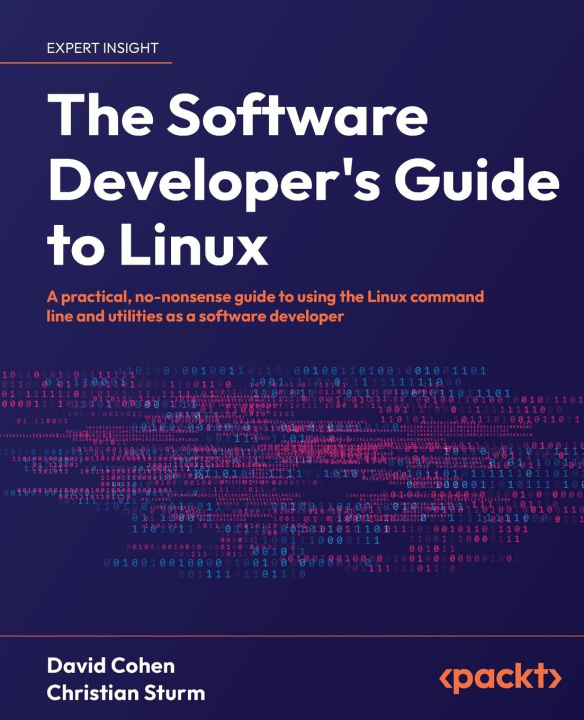
The Software Developer's Guide to Linux
 Anglais
 85 b
85 b
 Livraison à Autriche
Jusqu'à 30 jours pour les retours
Les clients ont également acheté





 /
/
 Livre de poche
 11.19
€
11.19
€

 /
Livre de poche
17.95
€
/
Livre de poche
17.95
€








 /
Livre de poche
23.19
€
/
Livre de poche
23.19
€




A must-read for software developers lacking command-line skills, focusing on Linux. It provides transferable command-line proficiency for use in Mac OS, Unix, and Windows with WSL
Key Features
- A practical, no-nonsense guide specifically written for developers (not sysadmins) who need to quickly learn command-line skills
- Expand your practical skills and look like a wizard on the command line
- Build practical skills to work effectively with the most common CLI tools on Unix-like systems
Book Description
Developers are always looking to raise their game to the next level, yet most are completely lost when it comes to the Linux command line.
This book is the bridge that will take you to the next level in your software development career. Most of the skills in the book can be immediately put to work to make you a more efficient developer. It's written specifically for software engineers, not Linux system administrators, so each chapter will equip you with just enough theory to understand what you're doing before diving into practical commands that you can use in your day-to-day work as a software developer.
As you work through the book, you'll quickly absorb the basics of how Linux works while you get comfortable moving around the command line. Once you've got the core skills, you'll see how to apply them in different contexts that you'll come across as a software developer: building and working with Docker images, automating boring build tasks with shell scripts, and troubleshooting issues in production environments.
By the end of the book, you'll be able to use Linux and the command line comfortably and apply your newfound skills in your day-to-day work to save time, troubleshoot issues, and be the command-line wizard that your team turns to.
What you will learn
- Learn useful command-line tricks and tools that make software development, testing, and troubleshooting easy
- Understand how Linux and command line environments actually work
- Create powerful, customized tools and save thousands of lines of code with developer-centric Linux utilities
- Gain hands-on experience with Docker, SSH, and Shell scripting tasks that make you a more effective developer
- Get comfortable searching logs and troubleshooting problems on Linux servers
- Handle common command-line situations that stump other developers
Who this book is for
This book is for software developers who want to build practical Command-Line (CLI) and Linux skills and who want to quickly fill the gap to advance their skills and their career. Basic knowledge of editing text, working with files and folders, having some idea of what "operating systems" are, installing software, and using a development environment is assumed.
Table of Contents
- How the Command Line Works
- Working with Processes
- Service Management with systemd
- Using Shell History
- Introducing Files
- Editing Files on the Command Line
- Users and Groups
- Ownership and Permissions
- Managing Installed Software
- Configuring Software
- Pipes and Redirection
- Automating Tasks with Shell Scripts
- Secure Remote Access with SSH
- Version Control with Git
- Containerizing Applications with Docker
- Monitoring Application Logs
- Load Balancing and HTTP


À propos du livre
Anglais

Offrez ce livre dès aujourd'hui
C’est simple
1 Ajouter au panier et choisir l'option Livrer comme cadeau à la caisse. 2 Nous vous enverrons un bon d'achat 3 Le livre arrivera à l'adresse du destinataireCeci pourrait également vous intéresser




 /
Livre de poche
14.49
€
/
Livre de poche
14.49
€



 /
Livre de poche
10.89
€
/
Livre de poche
10.89
€









 /
Reliure à anneaux
74.59
€
/
Reliure à anneaux
74.59
€