
 Contact
 Comment faire ses achats
Livraison
Guide d'achat
 Anglais
 368 b
368 b
 Livraison à Autriche
Jusqu'à 30 jours pour les retours
Les clients ont également acheté





 /
/
 DVD
DVD
 18.29
€
18.29
€











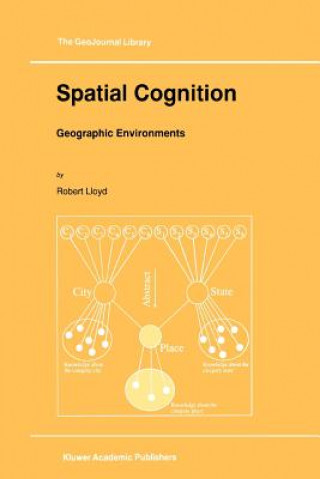
This volume approaches geography as a cognitive science focusing on the processes used for learning and decision-making. This book argues that geographers need a theoretical understanding of how people process spatial information. How people store and use information they have acquired about environments is considered in a variety of geographic contexts. Cognitive theories and connectionist models are related to geographic problems to explain how spatial information is processed. The nature of cognitive maps, the processes used to encode them, and their systematic distortions are reviewed. A perception theory that explains the temporary tracking of environmental objects is considered as well as a theory that explains how verbal and visual information can be combined to create mental models of geographic environments in long-term memory. Other theories are considered that explain visual search processes used to find symbols or boundaries on maps. The processes used to learn spatial categories and prototypes, to create abstract knowledge in basic-level categories, and to judge the similarity of objects are also addressed. Neural networks are discussed throughout the book and used to model learning and classification processes. Audience: This book is directed at researchers and students in geography/social geography, psychology and cognitive science interested in spatial cognition.


À propos du livre
Anglais

Offrez ce livre dès aujourd'hui
C’est simple
1 Ajouter au panier et choisir l'option Livrer comme cadeau à la caisse. 2 Nous vous enverrons un bon d'achat 3 Le livre arrivera à l'adresse du destinataireCeci pourrait également vous intéresser








 /
/
 Livre de poche
11.59
€
Livre de poche
11.59
€


 /
Livre de poche
48.49
€
/
Livre de poche
48.49
€


 /
Livre de poche
16.89
€
/
Livre de poche
16.89
€

 /
Livre de poche
21.19
€
/
Livre de poche
21.19
€


Bonjour ! Je suis Libroamiko, votre conseiller littéraire.
Comment puis-je vous aider ?