
 Contact
 Comment faire ses achats
Livraison
Guide d'achat
Social
 Anglais
 36 b
36 b
 Livraison à Autriche
Jusqu'à 30 jours pour les retours
Les clients ont également acheté

























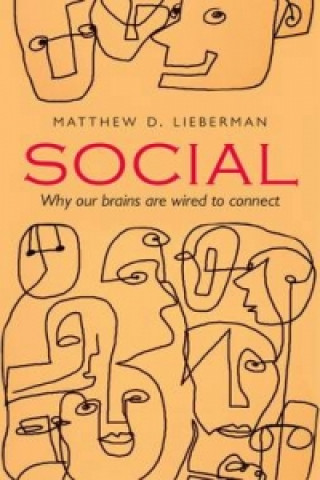
Why are we influenced by the behaviour of complete strangers? Why does the brain register similar pleasure when I perceive something as 'fair' or when I eat chocolate? Why can we be so profoundly hurt by bereavement? What are the evolutionary benefits of these traits? The young discipline of 'social cognitive neuroscience' has been exploring this fascinating interface between brain science and human behaviour since the late 1990s. Now one of its founding pioneers, Matthew D. Lieberman, presents the discoveries that he and fellow researchers have made. Using fMRI scanning and a range of other techniques, they have been able to see that the brain responds to social pain and pleasure the same way as physical pain and pleasure; and that unbeknown to ourselves, we are constantly 'mindreading' other people so that we can fit in with them. It is clear that our brains are designed respond to and be influenced by others. For good evolutionary reasons, he argues, we are wired to be social. The implications are numerous and profound. Do we have to rethink what we understand by identity, and free will? How can managers improve the way their teams relate and perform? Could we organize large social institutions in ways that would work far better? And could there be whole new methods of education?


À propos du livre
Anglais

Offrez ce livre dès aujourd'hui
C’est simple
1 Ajouter au panier et choisir l'option Livrer comme cadeau à la caisse. 2 Nous vous enverrons un bon d'achat 3 Le livre arrivera à l'adresse du destinataireCeci pourrait également vous intéresser
























Bonjour ! Je suis Libroamiko, votre conseiller littéraire.
Comment puis-je vous aider ?