
 Contact
 Comment faire ses achats
Livraison
Guide d'achat
Sign Language
 Anglais
 162 b
162 b
 Livraison à Autriche
Jusqu'à 30 jours pour les retours
Ceci pourrait également vous intéresser
 /
/
 Livre de poche
 8.29
€
8.29
€













 /
Livre de poche
10.19
€
/
Livre de poche
10.19
€

 /
Livre de poche
44.39
€
/
Livre de poche
44.39
€






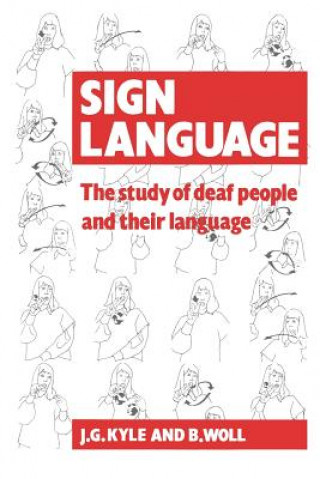
The discovery of the importance of sign language in the deaf community is very recent indeed. This book provides a study of the communication and culture of deaf people, and particularly of the deaf community in Britain. The authors' principal aim is to inform educators, psychologists, linguists and professionals working with deaf people about the rich language the deaf have developed for themselves - a language of movement and space, of the hands and of the eyes, of abstract communication as well as iconic story telling. The first chapters of the book discuss the history of sign language use, its social aspects and the issues surrounding the language acquisition of deaf children (BSL) follows, and the authors also consider how the signs come into existence, change over time and alter their meanings, and how BSL compares and contrasts with spoken languages and other signed languages. Subsequent chapters examine sign language learning from a psychological perspective and other cognitive issues. The book concludes with a consideration of the applications of sign language research, particularly in the contentious field of education. There is still much to be discovered about sign language and the deaf community, but the authors have succeeded in providing an extensive framework on which other researchers can build, from which professionals can develop a coherent practice for their work with deaf people, and from which hearing parents of deaf children can draw the confidence to understand their children's world.


À propos du livre
Anglais

Offrez ce livre dès aujourd'hui
C’est simple
1 Ajouter au panier et choisir l'option Livrer comme cadeau à la caisse. 2 Nous vous enverrons un bon d'achat 3 Le livre arrivera à l'adresse du destinataireBonjour ! Je suis Libroamiko, votre conseiller littéraire.
Comment puis-je vous aider ?