
 Contact
 Comment faire ses achats

Livraison
Guide d'achat
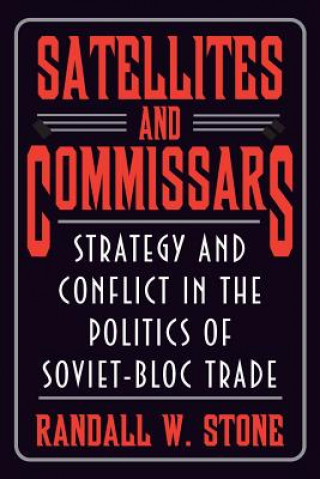
Satellites and Commissars
Strategy and Conflict in the Politics of Soviet-Bloc Trade
 Anglais
 140 b
 Livraison à Autriche
Jusqu'à 30 jours pour les retours
Les clients ont également acheté




 /
 Livre de poche
 17.69
€











 /
Livre relié
20.99
€


 /
Livre de poche
18.95
€
 /
Livre de poche
54.99
€


 /
Livre de poche
24.99
€




Why did the Soviet Union squander the political leverage afforded by its trade subsidy to Eastern Europe? Why did Soviet officials fail to bargain with resolve, to link subsidies to salient political issues, to make credible commitments, and to monitor the satellites' policies? Using an unprecedented array of formerly secret documents housed in archives in Moscow, Warsaw, and Prague, as well as interviews with former Communist officials across Eastern Europe, Randall Stone answers these questions and others that have long vexed Western political scientists. Stone argues that trade politics revolved around the incentives created by distorted prices. The East European satellites profited by trading on the margin between prices on the Western market and those in the Soviet bloc. The Soviet Union made numerous attempts to reduce its implicit trade subsidy and increase the efficiency of the bloc, but the satellites managed consistently to outmaneuver Soviet negotiators. Stone demonstrates how the East Europeans artfully resisted Soviet objectives. Stone draws upon recent developments in bargaining and principal-agent theory, arguing that the incentives created by domestic institutions weakened Soviet bargaining strategies. In effect, he suggests, perverse incentive structures in the Soviet economy were exported into Soviet foreign policy. Furthermore, Stone argues, incentives to smother information were so deeply entrenched that they frustrated numerous attempts to reform Soviet institutions.


À propos du livre
Anglais
Catégories

Offrez ce livre dès aujourd'hui
C’est simple
1 Ajouter au panier et choisir l'option Livrer comme cadeau à la caisse. 2 Nous vous enverrons un bon d'achat 3 Le livre arrivera à l'adresse du destinataireCeci pourrait également vous intéresser
 /
Livre de poche
39.79
€

 /
Livre relié
41.49
€



 /
Livre de poche
21.19
€
 /
Livre de poche
8.19
€
 /
Livre de poche
53.71
€





 /
Livre de poche
9.89
€








Bonjour ! Je suis Libroamiko, votre conseiller littéraire.
Comment puis-je vous aider ?