
 Contact
 Comment faire ses achats
Livraison
Guide d'achat
RISC-V Architecture and Implementation Guide
 Anglais
 65 b
65 b
 Livraison à Autriche
Jusqu'à 30 jours pour les retours
Les clients ont également acheté





 /
/
 Livre de poche
 56.69
€
56.69
€

 /
Livre relié
79.69
€
/
Livre relié
79.69
€


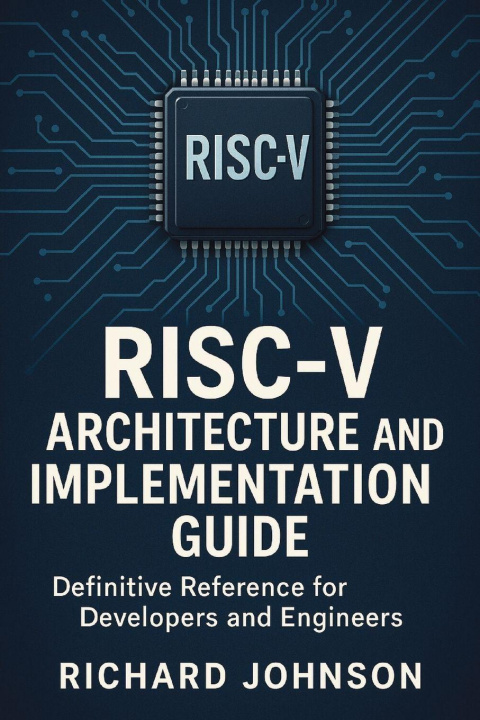
The "RISC-V Architecture and Implementation Guide" offers a comprehensive and authoritative exploration of the RISC-V instruction set architecture, guiding readers through its foundational principles of simplicity, modularity, and open design. Structured to serve both newcomers and seasoned engineers, the book begins by delving into the architectural philosophy that underpins RISC-V, its specification ecosystem, and a detailed comparison with legacy ISAs like x86, ARM, and MIPS. Readers gain context on RISC-V's evolution and adoption, learning how the openness and extensibility of the platform are driving its widespread industry and academic momentum.
Progressing from architectural theory to hands-on technical depth, the guide examines RISC-V instruction sets, including standard and experimental extensions, and provides a meticulous overview of microarchitecture design practices. Topics such as pipeline architectures, branch prediction, memory hierarchy integration, and performance profiling are addressed alongside practical implementation strategies. The book rigorously covers privilege architectures, system-level features, and best practices in RTL development, FPGA prototyping, SoC integration, and verification-equipping hardware designers with vital knowledge for robust and efficient RISC-V system realization.
The latter chapters showcase the dynamic RISC-V software ecosystem and the architecture's extensibility into domain-specific accelerators and custom silicon design. Readers are walked through toolchain internals, compiler support, OS integration, and security, reliability, and robustness considerations vital for modern compute environments. Concluding with insights into emerging research, future roadmap, and case studies in industry adoption, this guide is an indispensable resource for professionals, researchers, and anyone invested in shaping the future of open and extensible computing.


À propos du livre
Anglais

Offrez ce livre dès aujourd'hui
C’est simple
1 Ajouter au panier et choisir l'option Livrer comme cadeau à la caisse. 2 Nous vous enverrons un bon d'achat 3 Le livre arrivera à l'adresse du destinataireCeci pourrait également vous intéresser







 /
Livre relié
30.39
€
/
Livre relié
30.39
€














Bonjour ! Je suis Libroamiko, votre conseiller littéraire.
Comment puis-je vous aider ?