
 Contact
 Comment faire ses achats

Livraison
Guide d'achat
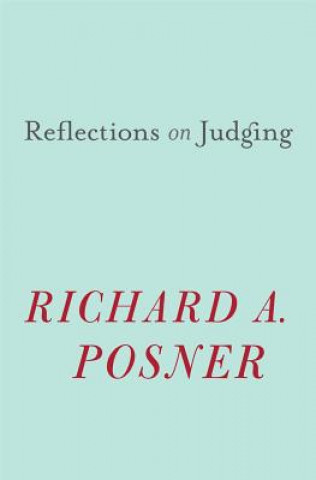
Reflections on Judging
 Anglais
 87 b
 Livraison à Autriche
Jusqu'à 30 jours pour les retours
Les clients ont également acheté





In "Reflections on Judging," Richard Posner distills the experience of his thirty-one years as a judge of the United States Court of Appeals for the Seventh Circuit. Surveying how the judiciary has changed since his 1981 appointment, he engages the issues at stake today, suggesting how lawyers should argue cases and judges decide them, how trials can be improved, and, most urgently, how to cope with the dizzying pace of technological advance that makes litigation ever more challenging to judges and lawyers. For Posner, legal formalism presents one of the main obstacles to tackling these problems. Formalist judges--most notably Justice Antonin Scalia--needlessly complicate the legal process by advocating "canons of constructions" (principles for interpreting statutes and the Constitution) that are confusing and self-contradictory. Posner calls instead for a renewed commitment to legal realism, whereby a good judge gathers facts, carefully considers context, and comes to a sensible conclusion that avoids inflicting collateral damage on other areas of the law. This, Posner believes, was the approach of the jurists he most admires and seeks to emulate: Oliver Wendell Holmes, Louis Brandeis, Benjamin Cardozo, Learned Hand, Robert Jackson, and Henry Friendly, and it is an approach that can best resolve our twenty-first-century legal disputes.


À propos du livre
Anglais

Offrez ce livre dès aujourd'hui
C’est simple
1 Ajouter au panier et choisir l'option Livrer comme cadeau à la caisse. 2 Nous vous enverrons un bon d'achat 3 Le livre arrivera à l'adresse du destinataireCeci pourrait également vous intéresser








 /
 Livre de poche
 12.49
€





 /
Livre de poche
11.89
€






Bonjour ! Je suis Libroamiko, votre conseiller littéraire.
Comment puis-je vous aider ?