
 Contact
 Comment faire ses achats
Livraison
Guide d'achat
Random Order
 Anglais
 145 b
145 b
 Livraison à Autriche
Jusqu'à 30 jours pour les retours
Les clients ont également acheté

 /
/
 Livre de poche
 63.29
€
63.29
€

 /
Livre de poche
8.00
€
/
Livre de poche
8.00
€


 /
Livre relié
9.29
€
/
Livre relié
9.29
€
 /
Livre de poche
22.19
€
/
Livre de poche
22.19
€







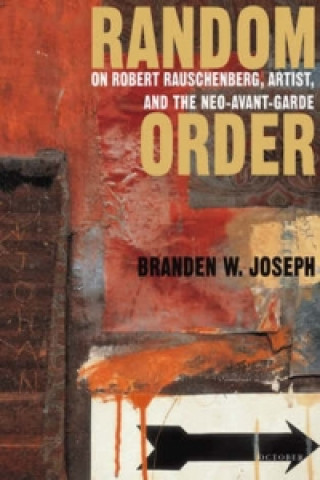
Robert Rauschenberg is one of the most important visual artists of the second half of the twentieth century. In Random Order, Branden Joseph examines Rauschenberg's work in the context of the American neo-avant-garde. One of the foundations of his study is Rauschenberg's professional relationship with experimental composer John Cage. From the moment of their encounter at Black Mountain College in 1952, Joseph argues, Rauschenberg and Cage initiated a new avant-garde project, one that approached the idea of difference not in terms of negation but as a positive force. Claiming that Rauschenberg's work cannot be understood solely from the standpoint of the Frankfurt School--whose theories have dominated discussions of avant-garde and neo-avant-garde aesthetics--Joseph turns to the theoretical positions of Gilles Deleuze and Jacques Derrida. Rauschenberg's neo-avant-garde was not a simple repetition of earlier avant-garde movements, Joseph shows, but a series of practices that opposed the rise of postwar spectacle, commodification, and mass conformity.Beginning with the White Paintings, Joseph examines Rauschenberg?s artistic development from 1951 to 1971. He looks at the black paintings, Red Paintings, Elemental Paintings and Elemental Sculptures, Combines and Combine paintings, transfer drawings and silkscreens, performances, and explorations in art and technology. Joseph?s study not only offers new interpretations of Rauschenberg?s work, but also deepens our understanding of the entire neo-avant-garde project.


À propos du livre
Anglais

Offrez ce livre dès aujourd'hui
C’est simple
1 Ajouter au panier et choisir l'option Livrer comme cadeau à la caisse. 2 Nous vous enverrons un bon d'achat 3 Le livre arrivera à l'adresse du destinataireCeci pourrait également vous intéresser











Bonjour ! Je suis Libroamiko, votre conseiller littéraire.
Comment puis-je vous aider ?