
 Contact
 Comment faire ses achats
Livraison
Guide d'achat
Programming Literature
 Anglais
 277 b
277 b
 Livraison à Autriche
Jusqu'à 30 jours pour les retours
Les clients ont également acheté








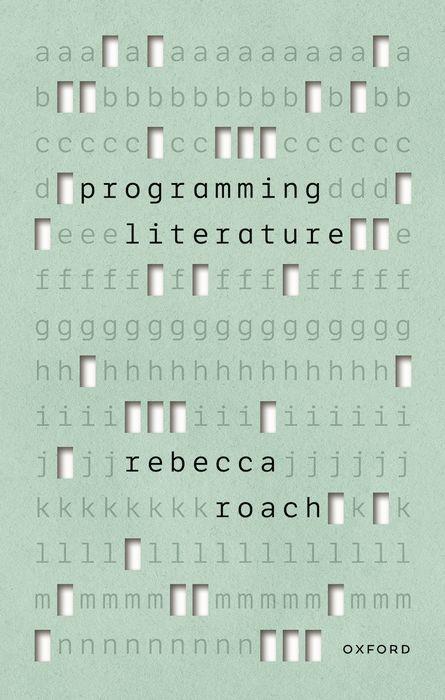
This is a book about the messy, archival worlds of literature and computing, and the myriad of relations that have existed between the two. Before J. M. Coetzee was a writer of Nobel-Prize winning novels, the South African was a programmer for one of the most significant Cold War supercomputer projects in Britain. Experimental British writer Christine Brooke-Rose worked at Bletchley Park with Alan Turing. When not opining about modernism, Canadian literary critic Hugh Kenner was a devoted computer hobbyist. Literary scholars have often not known what to make of these ''other careers'': intimidating, irrelevant, outside of the scope of literary studies, surely? When they do make links, it is often via the frame of formal logic that has dominated discussions of both computer history and literary modernism. This book starts from a different assumption: that, far from irrelevant, these material experiences were significant in the development of the literary projects of writers including Coetzee, Brooke-Rose, Kenner, William Gaddis, and Kamau Brathwaite. It contends that it is in the practice and the archive, rather than on the plane of abstraction, that we can best see this influence. Addressing literary scholars, media and computer historians, and digital theorists alike, Programming Literature productively reframes contemporary debates around artificial intelligence, the value of the humanities, and tech culture by emphasizing just how material these worlds have always been.


À propos du livre
Anglais
Catégories

Offrez ce livre dès aujourd'hui
C’est simple
1 Ajouter au panier et choisir l'option Livrer comme cadeau à la caisse. 2 Nous vous enverrons un bon d'achat 3 Le livre arrivera à l'adresse du destinataireCeci pourrait également vous intéresser
 /
/
 Livre de poche
 9.39
€
9.39
€












Bonjour ! Je suis Libroamiko, votre conseiller littéraire.
Comment puis-je vous aider ?