
 Contact
 Comment faire ses achats
Livraison
Guide d'achat
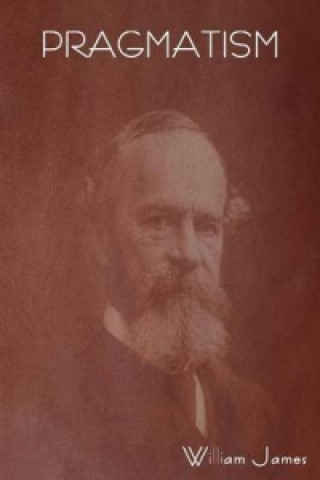
Pragmatism
 Anglais
 33 b
33 b
 Livraison à Autriche
Jusqu'à 30 jours pour les retours
Les clients ont également acheté












 /
/
 Livre de poche
 53.69
€
53.69
€







 /
Livre de poche
49.90
€
/
Livre de poche
49.90
€

 /
Livre de poche
39.00
€
/
Livre de poche
39.00
€




 /
Livre de poche
12.69
€
/
Livre de poche
12.69
€

 /
Livre de poche
17.95
€
/
Livre de poche
17.95
€


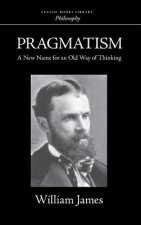
William James explains the pragmatic method and its consequences, advocating its usefulness in understanding what we take to be true belief. Pragmatism holds that to have a belief is to have certain rules for action. Any and every notion has its own set of practical consequences. The meaning of a thought is said to be whatever course of action necessarily follow from it. In metaphysical disputes between false and true notions, the dispute must be settled by considering the practical consequences of the two notions. Any two notions that can be shown to have identical practical consequences are shown to be identical notions. Writes James, "Whenever a dispute is serious, we ought to be able to show some practical difference that must follow from one side or the other's being right."
To have a clear and complete conception of an object is equivalent to considering the practical, empirical effects and properties of the object, and the conduct it will produce. James credits Charles Peirce for introducing this way of thinking about belief. James writes that it was Peirce's notion that "To attain perfect clearness in our thoughts of an object, then, we need only consider what conceivable effects of a practical kind the object may involve- what sensations we are to expect from it, and what reactions we must prepare," and that further, "to develop a thought's meaning, we need only determine what conduct it is fitted to produce: that conduct is for us its sole significance."


À propos du livre
Anglais

Offrez ce livre dès aujourd'hui
C’est simple
1 Ajouter au panier et choisir l'option Livrer comme cadeau à la caisse. 2 Nous vous enverrons un bon d'achat 3 Le livre arrivera à l'adresse du destinataireCeci pourrait également vous intéresser
 /
Livre de poche
10.69
€
/
Livre de poche
10.69
€
 /
Livre de poche
11.59
€
/
Livre de poche
11.59
€
 /
Livre de poche
18.69
€
/
Livre de poche
18.69
€





 /
Livre relié
126.39
€
/
Livre relié
126.39
€




 /
Livre de poche
10.69
€
/
Livre de poche
10.69
€


 /
Livre relié
257.69
€
/
Livre relié
257.69
€

 /
Livre de poche
10.79
€
/
Livre de poche
10.79
€
Bonjour ! Je suis Libroamiko, votre conseiller littéraire.
Comment puis-je vous aider ?