
 Contact
 Comment faire ses achats
Livraison
Guide d'achat
Practical Training Techniques
 Anglais
 214 b
214 b
 Livraison à Autriche
Jusqu'à 30 jours pour les retours
Les clients ont également acheté




 /
/
 Livre de poche
 24.89
€
24.89
€




 /
Livre de poche
38.00
€
/
Livre de poche
38.00
€




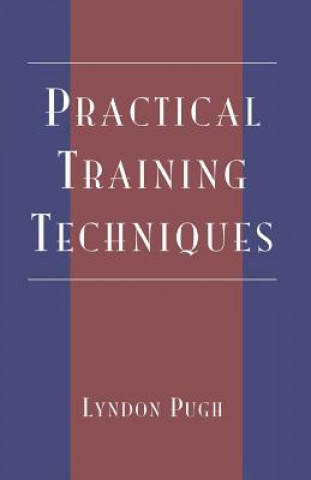
Despite the proliferation of cyber-this and digital-that, many people prefer to learn by face-to-face communication, and to acquire job-related skills and knowledge in their own workplace. Why? Perhaps because the abilities to talk, listen and explain clearly-in short, to communicate-are given equal shrift. Or because a fostering of these abilities is the responsibility of everyone in that workplace. Or even because, pragmatically speaking, such training can be done easily with a minimum of infrastructure and support. Whatever the reason, Lyndon Pugh's Practical Training Techniques speaks plainly and persuasively of the dynamic relationship between trainer and learner. It argues for the use of traditional training techniques based on classical ideas, describing a process that owes as much to Aristotle as to modern gurus such as Blanchard, Naisbitt and Tapscott. Traditional training, claims Pugh, is uniquely placed to meet the learning requirements of modern organizations, precisely because such organizations value on-site ongoing development over off-site "just in time" approaches. And while technology undoubtedly can improve the lot of trainers, as well as the efficiency of the learning process, belief in its efficacy as the primary channel for learning delivery is by no means universal. Practical Training Techniques takes the experts out of learning, and can be used by just about anyone who needs to train just about anyone else, to do...well, just about anything!


À propos du livre
Anglais
Catégories

Offrez ce livre dès aujourd'hui
C’est simple
1 Ajouter au panier et choisir l'option Livrer comme cadeau à la caisse. 2 Nous vous enverrons un bon d'achat 3 Le livre arrivera à l'adresse du destinataireCeci pourrait également vous intéresser

























Bonjour ! Je suis Libroamiko, votre conseiller littéraire.
Comment puis-je vous aider ?