
 Contact
 Comment faire ses achats
Livraison
Guide d'achat
 Anglais
 345 b
345 b
 Livraison à Autriche
Jusqu'à 30 jours pour les retours
Les clients ont également acheté
















 /
/
 Livre de poche
 69.90
€
69.90
€


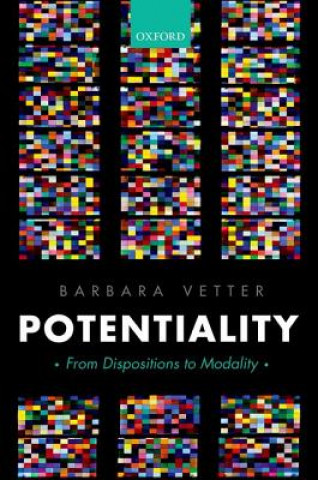
Individual objects have potentials: paper has the potential to burn, an acorn has the potential to turn into a tree, some people have the potential to run a mile in less than four minutes. Barbara Vetter provides a systematic investigation into the metaphysics of such potentials, and an account of metaphysical modality based on them. In contemporary philosophy, potentials have been recognized mostly in the form of so-called dispositions: solubility, fragility, and so on. Vetter takes dispositions as her starting point, but argues for and develops a more comprehensive conception of potentiality. She shows how, with this more comprehensive conception, an account of metaphysical modality can be given that meets three crucial requirements: (1) Extensional correctness: providing the right truth-values for statements of possibility and necessity; (2) formal adequacy: providing the right logic for metaphysical modality; and (3) semantic utility: providing a semantics that links ordinary modal language to the metaphysics of modality. The resulting view of modality is a version of dispositionalism about modality: it takes modality to be a matter of the dispositions of individual objects (and, crucially, not of possible worlds). This approach has a long philosophical tradition going back to Aristotle, but has been largely neglected in contemporary philosophy. In recent years, it has become a live option again due to the rise of anti-Humean, powers-based metaphysics. The aim of Potentiality and Possibility is to develop the dispositionalist view in a way that takes account of contemporary developments in metaphysics, logic, and semantics.


À propos du livre
Anglais

Offrez ce livre dès aujourd'hui
C’est simple
1 Ajouter au panier et choisir l'option Livrer comme cadeau à la caisse. 2 Nous vous enverrons un bon d'achat 3 Le livre arrivera à l'adresse du destinataireCeci pourrait également vous intéresser

 /
Livre de poche
40.69
€
/
Livre de poche
40.69
€












 /
Livre relié
30.79
€
/
Livre relié
30.79
€


 /
Livre de poche
15.39
€
/
Livre de poche
15.39
€



 /
Livre de poche
21.99
€
/
Livre de poche
21.99
€



Bonjour ! Je suis Libroamiko, votre conseiller littéraire.
Comment puis-je vous aider ?