
 Contact
 Comment faire ses achats
Livraison
Guide d'achat
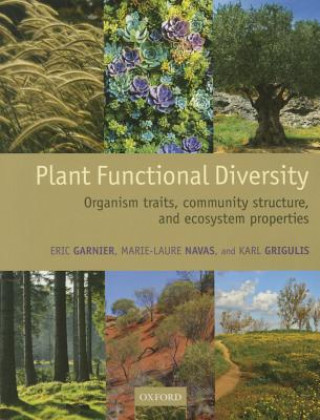
Plant Functional Diversity
Organism Traits, Community Structure, and Ecosystem Properties
 Anglais
 480 b
480 b
 Livraison à Autriche
Jusqu'à 30 jours pour les retours
Les clients ont également acheté




 /
/
 Livre de poche
 26.99
€
26.99
€

 Vinyle audio
43.89
€
Vinyle audio
43.89
€

Biological diversity, the variety of living organisms on Earth, is traditionally viewed as the diversity of taxa, and species in particular. However, other facets of diversity also need to be considered for a comprehensive understanding of evolutionary and ecological processes. This novel book demonstrates the advantages of adopting a functional approach to diversity in order to improve our understanding of the functioning of ecological systems and their components. The focus is on plants, which are major components of these systems, and for which the functional approach has led to major scientific advances over the last 20 years. Plant Functional Diversity presents the rationale for a trait-based approach to functional diversity in the context of comparative plant ecology and agroecology. It demonstrates how this approach can be used to address a number of highly debated questions in plant ecology pertaining to plant responses to their environment, controls on plant community structure, ecosystem properties, and the services these deliver to human societies. This research level text will be of particular relevance and use to graduate students and professional researchers in plant ecology, agricultural sciences and conservation biology.


À propos du livre
Anglais

Offrez ce livre dès aujourd'hui
C’est simple
1 Ajouter au panier et choisir l'option Livrer comme cadeau à la caisse. 2 Nous vous enverrons un bon d'achat 3 Le livre arrivera à l'adresse du destinataireCeci pourrait également vous intéresser












 /
Livre de poche
9.29
€
/
Livre de poche
9.29
€

 /
Livre de poche
11.89
€
/
Livre de poche
11.89
€



 /
Livre de poche
45.49
€
/
Livre de poche
45.49
€