Contact
 Comment faire ses achats
Livraison
Guide d'achat
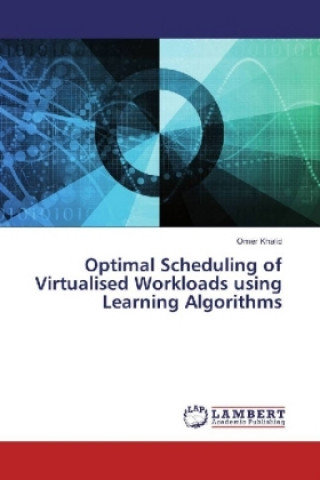
Optimal Scheduling of Virtualised Workloads using Learning Algorithms
 Anglais
 160 b
160 b
 Livraison à Autriche
Jusqu'à 30 jours pour les retours
Les clients ont également acheté



 /
/
 Livre de poche
 180.99
€
180.99
€





 /
Livre de poche
15.95
€
/
Livre de poche
15.95
€




 /
Livre de poche
37.19
€
/
Livre de poche
37.19
€

 /
Livre de poche
14.49
€
/
Livre de poche
14.49
€
 /
Livre de poche
13.99
€
/
Livre de poche
13.99
€


 /
Livre de poche
46.59
€
/
Livre de poche
46.59
€

The introduction of virtualization technology to grid and cloud computing infrastructures has enabled applications to be decoupled from the underlying hardware providing the benefits of portability, better control over execution environment and isolation. Virtualization layer also incurs a performance penalty, which can be significant for High Performance Computing (HPC) applications with high work volumes. Virtualization thus brings new requirements for dynamic adaptation of the scheduling to realize the potential flexibility of faster re-tasking and reconfiguration of workloads. Often scheduling approaches are based on some well-defined system-wide performance metric within the context of the given systems scope of operation. However, this is not optimized for the structure and behavior of specific applications having a mix of task types each with their own task precedences and resource requirements. This body of work is concerned with combining virtualization and adaptive scheduling techniques to achieve an optimal balance between task placement flexibility and processing performance on large scale scientific Grid infrastructure while offsetting virtualization overhead.


À propos du livre
Anglais

Offrez ce livre dès aujourd'hui
C’est simple
1 Ajouter au panier et choisir l'option Livrer comme cadeau à la caisse. 2 Nous vous enverrons un bon d'achat 3 Le livre arrivera à l'adresse du destinataireCeci pourrait également vous intéresser




 /
Livre de poche
100.29
€
/
Livre de poche
100.29
€
 /
Livre de poche
42.29
€
/
Livre de poche
42.29
€

 /
Livre de poche
21.09
€
/
Livre de poche
21.09
€

 /
Livre de poche
17.29
€
/
Livre de poche
17.29
€
 /
Livre de poche
15.39
€
/
Livre de poche
15.39
€

 /
Livre de poche
11.59
€
/
Livre de poche
11.59
€



 /
Livre de poche
16.99
€
/
Livre de poche
16.99
€