Contact
 Comment faire ses achats
Livraison
Guide d'achat
Normative Web
 Anglais
 289 b
289 b
 Livraison à Autriche
Jusqu'à 30 jours pour les retours
Les clients ont également acheté

 /
/
 Livre de poche
 26.69
€
26.69
€





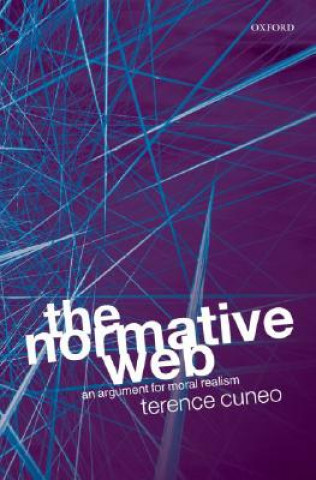
Antirealist views about morality claim that moral facts or truths do not exist. Do these views imply that other types of normative facts, such as epistemic ones, do not exist? The Normative Web develops a positive answer to this question. Terence Cuneo argues that the similarities between moral and epistemic facts provide excellent reason to believe that, if moral facts do not exist, then epistemic facts do not exist. But epistemic facts, it is argued, do exist: to deny their existence would commit us to an extreme version of epistemological skepticism. Therefore, Cuneo concludes, moral facts exist. And if moral facts exist, then moral realism is true. In so arguing, Cuneo provides not simply a defense of moral realism, but a positive argument for it. Moreover, this argument engages with a wide range of antirealist positions in epistemology such as error theories, expressivist views, and reductionist views of epistemic reasons. If the central argument of The Normative Web is correct, antirealist positions of these varieties come at a very high cost. Given their cost, Cuneo contends, we should find realism about both epistemic and moral facts highly attractive.


À propos du livre
Anglais

Offrez ce livre dès aujourd'hui
C’est simple
1 Ajouter au panier et choisir l'option Livrer comme cadeau à la caisse. 2 Nous vous enverrons un bon d'achat 3 Le livre arrivera à l'adresse du destinataireCeci pourrait également vous intéresser








 /
Livre de poche
32.29
€
/
Livre de poche
32.29
€