
 Contact
 Comment faire ses achats

Livraison
Guide d'achat
Nevada's Antler Overlap Sequence
The Ancestral Rocky Mountain Period Timeframe
 Anglais
 88 b
 Livraison à Autriche
Jusqu'à 30 jours pour les retours
Les clients ont également acheté

 /
 Livre de poche
 17.95
€

 /
Livre de poche
52.71
€











 /
Livre de poche
69.52
€


 /
Livre de poche
25.39
€




 /
Livre de poche
182.29
€


 /
Livre de poche
48.11
€



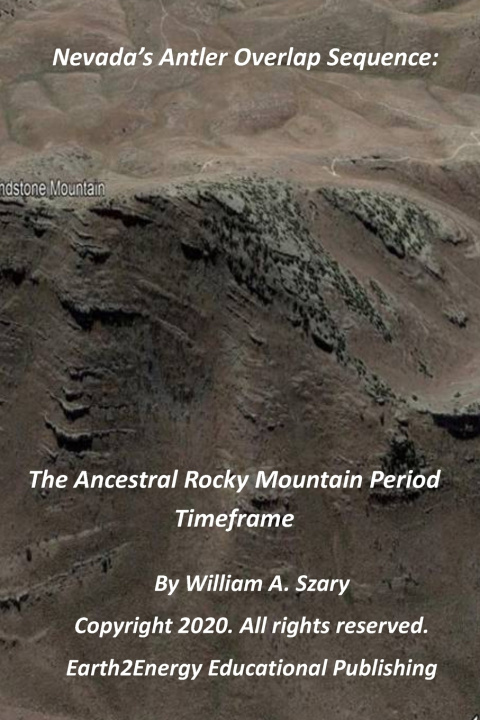
During the Ancestral Rocky Mountain period between Late Pennsylvanian to Early Permian time, Nevada was subjected to a different set of geological conditions due to it's closer proximity to the western and southwestern subduction zones off the Laurentian margin. While the interior parts of the western continental states of Idaho, Utah, Wyoming, and Colorado were subjected to Ancestral Rocky Mountain uplift and basin sedimentary tectonics, Nevada was subjected to basin and range type extension associated with faulting, folding, uplift, and basin development. Parts of the northeastern section of Nevada was exposed to Ancestral Rocky Mountain influences. Nevada's Ancestral Rocky Mountain period occurred between the Antler and Sonoma orogenies, placing it's Pennsylvanian and Permian period in a sedimentary overlapping sequence. This book attempts to assemble a geologic treatise focusing on the Antler Overlap Sequence (AOS) that occurred in the state during the Ancestral Rocky Mountain time frame.Chapter 1 describes the tectonic domains of Nevada from a paleo-geographic perspective.Chapter 2 presents Late Paleozoic tectonics.Chapter 3 provides stratigraphic and structural details on the Antler Peak Quadrangle in Humboldt and Lander Counties.Chapter 4 briefly describes the Humboldt Orogeny influenced by the Ancestral Rocky Mountains.Chapter 5 presents the geology of the Toiyabe Range.Chapter 6 presents Late Paleozoic deformation in the Osgood Mountains.Chapter 7 concludes the book with a discussion of the Ely-Bird Spring Basin, Wood River, Oquirrh basins, the Wyoming Shelf, and the timing of basin initiation.


À propos du livre
Anglais

Offrez ce livre dès aujourd'hui
C’est simple
1 Ajouter au panier et choisir l'option Livrer comme cadeau à la caisse. 2 Nous vous enverrons un bon d'achat 3 Le livre arrivera à l'adresse du destinataireCeci pourrait également vous intéresser




 /
Livre de poche
6.49
€


 /
Livre de poche
8.19
€

 /
Livre de poche
80.19
€



 /
Livre de poche
30.99
€

Bonjour ! Je suis Libroamiko, votre conseiller littéraire.
Comment puis-je vous aider ?