
 Contact
 Comment faire ses achats
Livraison
Guide d'achat
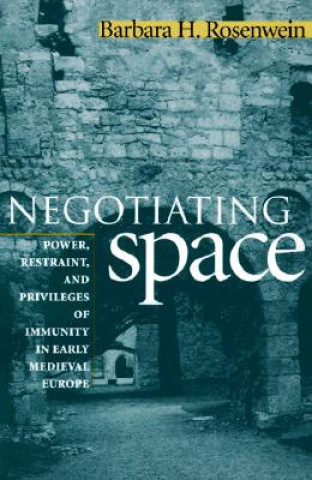
Negotiating Space
Power, Restraint, and Privileges of Immunity in Early Medieval Europe
 Anglais
 102 b
102 b
 Livraison à Autriche
Jusqu'à 30 jours pour les retours
Les clients ont également acheté





Why did early medieval kings declare certain properties to be immune from the judicial and fiscal encroachments of their own agents Did weakness compel them to prohibit their agents from entering these properties as historians have traditionally believed? In a richly detailed book that will be greeted as a landmark addition to the literature on the Middle Ages. Barbara H. Rosenwein argues that immunities were markers of power. By placing restraints on themselves and their agents, kings demonstrated their authority, affirmed their status. and manipulated the boundaries of sacred space.Rosenwein transforms our understanding of an institution central to the political and social dynamics of medieval Europe. She reveals how immunities were used by kings and other leaders to forge alliances with the noble families and monastic centers which were central to their power. Generally viewed as unchanging juridical instruments, immunities as they appear here are as fluid and diverse as the disparate social and political conflicts that they at once embody and seek to defuse. Their legacy reverberates in the modern world where liberal institutions, with their emphasis on state restraint, clash with others that encourage governmental intrusion. The protections against unreasonable searches and seizures provided by English common law and the U.S. Constitution developed in part out of the medieval experience of immunities and the institutions that were elaborated to breach them.


À propos du livre
Anglais

Offrez ce livre dès aujourd'hui
C’est simple
1 Ajouter au panier et choisir l'option Livrer comme cadeau à la caisse. 2 Nous vous enverrons un bon d'achat 3 Le livre arrivera à l'adresse du destinataireCeci pourrait également vous intéresser
 /
/
 Livre de poche
 8.69
€
8.69
€



 /
Livre relié
180.59
€
/
Livre relié
180.59
€


 /
Livre de poche
10.69
€
/
Livre de poche
10.69
€

Bonjour ! Je suis Libroamiko, votre conseiller littéraire.
Comment puis-je vous aider ?