
 Contact
 Comment faire ses achats
Livraison
Guide d'achat
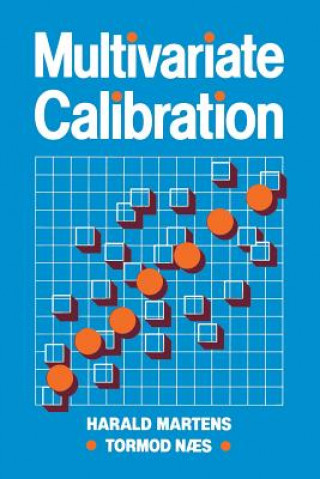
Multivariate Calibration
 Anglais
 969 b
969 b
 Livraison à Autriche
Jusqu'à 30 jours pour les retours
Les clients ont également acheté







 /
/
 Livre de poche
 27.09
€
27.09
€












 /
Livre de poche
11.79
€
/
Livre de poche
11.79
€

Multivariate Calibration Harald Martens, Chemist, Norwegian Food Research Institute, Aas, Norway and Norwegian Computing Center, Oslo, Norway Tormod Nas, Statistician, Norwegian Food Research Institute, Aas, Norway The aim of this inter-disciplinary book is to present an up-to-date view of multivariate calibration of analytical instruments, for use in research, development and routine laboratory and process operation. The book is intended to show practitioners in chemistry and technology how to extract the quantitative and understandable information embedded in non-selective, overwhelming and apparently useless measurements by multivariate data analysis. Multivariate calibration is the process of learning how to combine data from several channels, in order to overcome selectivity problems, gain new insight and allow automatic outlier detection. Multivariate calibration is the basis for the present success of high-speed Near-Infrared (NIR) diffuse spectroscopy of intact samples. But the technique is very general: it has shown similar advantages in, for instance, UV, Vis, and IR spectrophotometry, (transmittance, reflectance and fluorescence), for x-ray diffraction, NMR, MS, thermal analysis, chromatography (GC, HPLC) and for electrophoresis and image analysis (tomography, microscopy), as well as other techniques. The book is written at two levels: the main level is structured as a tutorial on the practical use of multivariate calibration techniques. It is intended for university courses and self-study for chemists and technologists, giving one complete and versatile approach, based mainly on data compression methodology in self-modelling PLS regression, with considerations of experimental design, data pre-processing and model validation. A second, more methodological, level is intended for statisticians and specialists in chemometrics. It compares several alternative calibration methods, validation approaches and ways to optimize the models. The book also outlines some cognitive changes needed in analytical chemistry, and suggests ways to overcome some communication problems between statistics and chemistry and technology.


À propos du livre
Anglais

Offrez ce livre dès aujourd'hui
C’est simple
1 Ajouter au panier et choisir l'option Livrer comme cadeau à la caisse. 2 Nous vous enverrons un bon d'achat 3 Le livre arrivera à l'adresse du destinataireCeci pourrait également vous intéresser








 /
Livre de poche
33.59
€
/
Livre de poche
33.59
€











 /
/
 Adobe ePub DRM
9.59
€
Adobe ePub DRM
9.59
€

 /
Livre relié
20.49
€
/
Livre relié
20.49
€

Bonjour ! Je suis Libroamiko, votre conseiller littéraire.
Comment puis-je vous aider ?