
 Contact
 Comment faire ses achats
Livraison
Guide d'achat
 Anglais
 343 b
343 b
 Livraison à Autriche
Jusqu'à 30 jours pour les retours
Les clients ont également acheté




 /
/
 Livre de poche
 20.09
€
20.09
€





 /
Livre de poche
14.99
€
/
Livre de poche
14.99
€

 /
Livre de poche
68.00
€
/
Livre de poche
68.00
€
 /
Livre de poche
13.99
€
/
Livre de poche
13.99
€

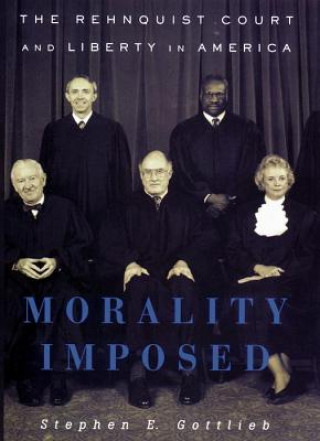
We like to think of judges and justices as making decisions based on the facts and the law. But to what extent do jurists decide cases in accordance with their own preexisting philosophy of law, and what specific ideological assumptions account for their decisions? Stephen E. Gottlieb adopts a unique perspective on the decision-making of Supreme Court justices, blending and re-characterizing traditional accounts of political philosophy in a way that plausibly explains many of the justices' voting patterns. A seminal study of the Rehnquist Court, Morality Imposed illustrates how, in contrast to previous courts which took their mandate to be a move toward a freer and/or happier society, the current court evidences little concern for this goal, focusing instead on thinly veiled moral judgments. Delineating a fault line between liberal and conservative justices on the Rehnquist Court, Gottlieb suggests that conservative justices have rejected the basic principles that informed post-New Deal individual rights jurisprudence and have substituted their own conceptions of moral character for these fundamental principles. Morality Imposed adds substantially to our understanding of the Supreme Court, its most recent cases, and the evolution of judicial philosophy in the U.S.


À propos du livre
Anglais

Offrez ce livre dès aujourd'hui
C’est simple
1 Ajouter au panier et choisir l'option Livrer comme cadeau à la caisse. 2 Nous vous enverrons un bon d'achat 3 Le livre arrivera à l'adresse du destinataireCeci pourrait également vous intéresser









 /
Livre relié
295.89
€
/
Livre relié
295.89
€
 /
Livre de poche
15.59
€
/
Livre de poche
15.59
€







 /
Livre de poche
11.19
€
/
Livre de poche
11.19
€








Bonjour ! Je suis Libroamiko, votre conseiller littéraire.
Comment puis-je vous aider ?