
 Contact
 Comment faire ses achats
Livraison
Guide d'achat
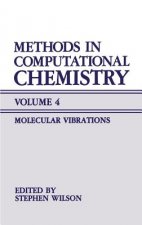
Methods in Computational Chemistry
Volume 1 Electron Correlation in Atoms and Molecules
 Anglais

 444 b
444 b
 Livraison à Autriche
Jusqu'à 30 jours pour les retours
Les clients ont également acheté










 /
/
 Livre de poche
 37.29
€
37.29
€





 /
Livre de poche
61.49
€
/
Livre de poche
61.49
€


 /
Livre de poche
12.59
€
/
Livre de poche
12.59
€







 /
Livre de poche
18.95
€
/
Livre de poche
18.95
€

When, forty years ago, as a student of Charles Coulson in Oxford I began work in theoretical chemistry, I was provided with a Brunsviga calculator-a small mechanical device with a handle for propulsion, metal levers for setting the numbers, and a bell that rang to indicate overflow. What has since come to be known as computational chemistry was just beginning. There followed a long period in which the fundamental theory of the "golden age" (1925-1935) was extended and refined and in which the dreams of the early practitioners were gradually turned into hard arithmetic reality. As a still-computing survivor from the early postwar days now enjoying the benefits of unbelievably improved hardware, I am glad to contribute a foreword to this series and to have the opportunity of providing a little historical perspective. After the Brunsviga came the electromechanical machines of the late 1940s and early 1950s, and a great reduction in the burden of calculating molecular wavefunctions. We were now happy. At least for systems con taining a few electrons it was possible to make fully ab initio calculations, even though semiempirical models remained indispensable for most molecules of everyday interest. The 1950 papers of Hall and of Roothaan represented an important milestone along the road to larger-scale non empirical calculations, extending the prewar work of Hartree and Fock from many-electron atoms to many-electron molecules-and thus into "real chemistry.


À propos du livre
Anglais

Offrez ce livre dès aujourd'hui
C’est simple
1 Ajouter au panier et choisir l'option Livrer comme cadeau à la caisse. 2 Nous vous enverrons un bon d'achat 3 Le livre arrivera à l'adresse du destinataireCeci pourrait également vous intéresser






 /
Livre relié
160.89
€
/
Livre relié
160.89
€
 /
Livre de poche
16.09
€
/
Livre de poche
16.09
€



 /
Livre de poche
15.39
€
/
Livre de poche
15.39
€

 /
Livre relié
40.69
€
/
Livre relié
40.69
€









Bonjour ! Je suis Libroamiko, votre conseiller littéraire.
Comment puis-je vous aider ?