
 Contact
 Comment faire ses achats
Livraison
Guide d'achat
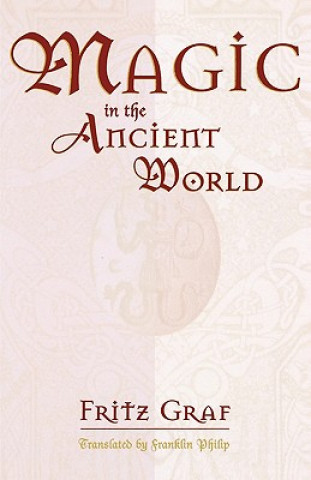
Magic in the Ancient World
 Anglais
 104 b
104 b
 Livraison à Autriche
Jusqu'à 30 jours pour les retours
Les clients ont également acheté


This text aims to provide a comprehensive introduction to ancient magic. It gives direct access to the sources but selects the important, characteristic examples. Ancient Greeks and Romans often turned to magic to achieve personal goals. Magical rites were seen as a route for direct access to the gods, for material gains as well as spiritual satisfaction. In this survey of magical beliefs and practices from the 6th century BC to late antiquity, Fritz Graf attempts to shed light on ancient religion. Evidence of widespread belief in the efficacy of magic is pervasive: the contemporaries of Plato and Aristotle placed voodoo dolls on graves in order to harm business rivals or attract lovers. The Twelve Tables of Roman Law forbids the magical transference of crops from one field to another. Graves, wells, and springs throughout the Mediterranean have yielded vast numbers of Greek and Latin curse tablets. And ancient literature abounds with scenes of magic, from necromancy to love spells. Graf explores the important types of magic in Greco-Roman antiquity, describing rites and explaining the theory behind them. He characterizes the ancient magician: his training and initiation, social status, and presumed connections with the divine world. With analysis of underlying conceptions and accounts of illustrative cases, Graf gives a picture of the practice of magic and its implications. He concludes with an evaluation of the relation of magic to religion. The book offers a look at ancient Greek and Roman thought and an understanding of popular recourse to the supernatural.


À propos du livre
Anglais
Catégories

Offrez ce livre dès aujourd'hui
C’est simple
1 Ajouter au panier et choisir l'option Livrer comme cadeau à la caisse. 2 Nous vous enverrons un bon d'achat 3 Le livre arrivera à l'adresse du destinataireCeci pourrait également vous intéresser













 /
/
 Livre de poche
 39.59
€
39.59
€

 /
Livre de poche
7.59
€
/
Livre de poche
7.59
€

 /
/
 Articles de papeterie
9.89
€
Articles de papeterie
9.89
€




Bonjour ! Je suis Libroamiko, votre conseiller littéraire.
Comment puis-je vous aider ?