
 Contact
 Comment faire ses achats
Livraison
Guide d'achat
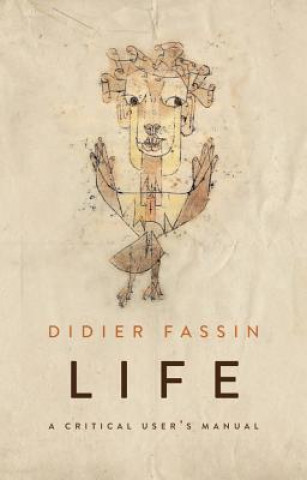
Life - A Critical User's Manual
 Anglais
 136 b
136 b
 Livraison à Autriche
Jusqu'à 30 jours pour les retours
Les clients ont également acheté

 /
/
 Livre de poche
 12.19
€
12.19
€












 /
Livre Concertina
7.09
€
/
Livre Concertina
7.09
€






 /
Livre de poche
69.90
€
/
Livre de poche
69.90
€




 /
Livre de poche
7.89
€
/
Livre de poche
7.89
€
 /
Livre de poche
43.19
€
/
Livre de poche
43.19
€



How can we think of life in its dual expression, matter and experience, the living and the lived? Philosophers and, more recently, social scientists have offered multiple answers to this question, often privileging one expression or the other - the biological or the biographical. But is it possible to conceive of them together and thus reconcile naturalist and humanist approaches? Using research conducted on three continents and drawing on the ideas of Wittgenstein, Benjamin and Foucault, Didier Fassin attempts to do so by developing three concepts: forms of life, ethics of life and politics of life. In the conditions of refugees and asylum-seekers, through humanitarian gestures and sacrifices for a cause, in light of mortality statistics and death benefits, and via a genealogical and ethnographical inquiry, the moral economy of life reveals troubling tensions in the way contemporary societies treat human beings. Once the pieces of this anthropological composition are assembled, like in Georges Perec's jigsaw puzzle, an image appears: that of unequal lives. Emerging from the prestigious Adorno Lectures delivered by Fassin in 2016, this profound investigation of life in contemporary societies, enriched by ethnographic fieldwork and written by one of the most distinguished anthropologists today, will be of great interest to readers across the humanities and social sciences.


À propos du livre
Anglais

Offrez ce livre dès aujourd'hui
C’est simple
1 Ajouter au panier et choisir l'option Livrer comme cadeau à la caisse. 2 Nous vous enverrons un bon d'achat 3 Le livre arrivera à l'adresse du destinataireCeci pourrait également vous intéresser

















 /
Livre de poche
59.59
€
/
Livre de poche
59.59
€





Bonjour ! Je suis Libroamiko, votre conseiller littéraire.
Comment puis-je vous aider ?