
 Contact
 Comment faire ses achats
Livraison
Guide d'achat
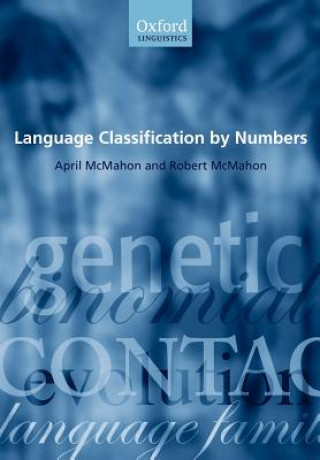
Language Classification by Numbers
 Anglais
 197 b
197 b
 Livraison à Autriche
Jusqu'à 30 jours pour les retours
Les clients ont également acheté























This book considers how languages have traditionally been divided into families, and asks how they should classified in the future. It describes and applies computer programs from biology and evolutionary genetics to data about languages and shows how the power of the computer can be harnessed to throw light on long-standing problems in historical linguistics. It tests current theories and hypotheses, shows how new ideas can be formulated, and offers a series of demonstrations that the new techniques applied to old data can produce convincing results that are sometimes startlingly at odds with accepted wisdom. April and Robert McMahon combine the expertise and perspectives of an historical linguist and a geneticist. They analyse the links between linguistic and population genetics, and consider how far language can be used to discover and understand the histories and interrelations of human populations. They explore the origins and formation of the Indo-European languages and examine less well studied languages in South America.Their book will be of great practical importance to students and researchers in historical and comparative linguistics and will interest all those concerned with the classification and diffusion of languages in fields such as archaeology, genetics, and anthropology. Its approachable style will appeal to general readers seeking to know more about the relationship between linguistic and human history.


À propos du livre
Anglais

Offrez ce livre dès aujourd'hui
C’est simple
1 Ajouter au panier et choisir l'option Livrer comme cadeau à la caisse. 2 Nous vous enverrons un bon d'achat 3 Le livre arrivera à l'adresse du destinataireCeci pourrait également vous intéresser

 /
/
 Livre de poche
 36.79
€
36.79
€






 /
Livre de poche
10.69
€
/
Livre de poche
10.69
€










Bonjour ! Je suis Libroamiko, votre conseiller littéraire.
Comment puis-je vous aider ?