
 Contact
 Comment faire ses achats
Livraison
Guide d'achat
J Dilla's Donuts
 Anglais

 27 b
27 b
 Livraison à Autriche
Jusqu'à 30 jours pour les retours
Les clients ont également acheté

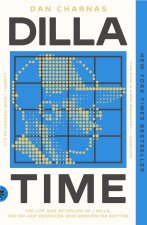
















From a Los Angeles hospital bed, equipped with little more than a laptop and a stack of records, James "J Dilla" Yancey crafted a set of tracks that would forever change the way beatmakers viewed their artform. The songs on Donuts are not hip hop music as "hip hop music" is typically defined; they careen and crash into each other, in one moment noisy and abrasive, gorgeous and heartbreaking the next. The samples and melodies tell the story of a man coming to terms with his declining health, a final love letter to the family and friends he was leaving behind. As a prolific producer with a voracious appetite for the history and mechanics of the music he loved, J Dilla knew the records that went into constructing Donuts inside and out. He could have taken them all and made a much different, more accessible album. If the widely accepted view is that his final work is a record about dying, the question becomes why did he make this record about dying? Drawing from philosophy, critical theory and musicology, as well as Dilla's own musical catalogue, Jordan Ferguson shows that the contradictory, irascible and confrontational music found on Donuts is as much a result of an artist's declining health as it is an example of what scholars call "late style," placing the album in a musical tradition that stretches back centuries.


À propos du livre
Anglais
Catégories

Offrez ce livre dès aujourd'hui
C’est simple
1 Ajouter au panier et choisir l'option Livrer comme cadeau à la caisse. 2 Nous vous enverrons un bon d'achat 3 Le livre arrivera à l'adresse du destinataireCeci pourrait également vous intéresser
























Bonjour ! Je suis Libroamiko, votre conseiller littéraire.
Comment puis-je vous aider ?