
 Contact
 Comment faire ses achats
Livraison
Guide d'achat
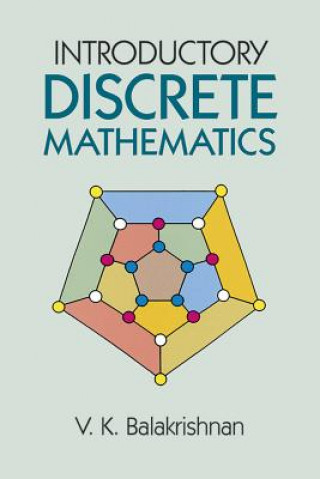
Introductory Discrete Mathematics
 Anglais
 31 b
31 b
 Livraison à Autriche
Jusqu'à 30 jours pour les retours
Les clients ont également acheté


 /
/
 Livre de poche
 8.29
€
8.29
€




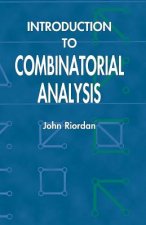



Preface 0 Set Theory and Logic 0.1 Introduction to Set Theory 0.2 Functions and Relations 0.3 Inductive Proofs and Recursive Definitions 0.4 The Language of Logic 0.5 Notes and References 0.6 Exercises 1 Combinatorics 1.1 Two Basic Counting Rules 1.2 Permutations 1.3 Combinations 1.4 More on Permutations and Combinations 1.5 The Pigeonhole Principle 1.6 The Inclusion-Exclusion Principle 1.7 Summary of Results in Combinatorics 1.8 Notes and References 1.9 Exercises 2 Generating Functions 2.1 Introduction 2.2 Ordinary Generating Functions 2.3 Exponential Generating Functions 2.4 Notes and References 2.5 Exercises 3 Recurrence Relations 3.1 Introduction 3.2 Homogeneous Recurrence Relations 3.3 Inhomogeneous Recurrence Relations 3.4 Recurrence Relations and Generating Functions 3.5 Analysis of Alogorithms 3.6 Notes and References 3.7 Exercises 4 Graphs and Digraphs 4.1 Introduction 4.2 Adjacency Matrices and Incidence Matrices 4.3 Joining in Graphs 4.4 Reaching in Digraphs 4.5 Testing Connectedness 4.6 Strong Orientation of Graphs 4.7 Notes and References 4.8 Exercises 5 More on Graphs and Digraphs 5.1 Eulerian Paths and Eulerian Circuits 5.2 Coding and de Bruijn Digraphs 5.3 Hamiltonian Paths and Hamiltonian Cycles 5.4 Applications of Hamiltonian Cycles 5.5 Vertex Coloring and Planarity of Graphs 5.6 Notes and References 5.7 Exercises 6 Trees and Their Applications 6.1 Definitions and Properties 6.2 Spanning Trees 6.3 Binary Trees 6.4 Notes and References 6.5 Exercises 7 Spanning Tree Problems 7.1 More on Spanning Trees 7.2 Kruskal's Greedy Algorithm 7.3 Prim's Greedy Algorithm 7.4 Comparison of the Two Algorithms 7.5 Notes and References 7.6 Exercises 8 Shortest Path Problems 8.1 Introduction 8.2 Dijkstra's Algorithm 8.3 Floyd-Warshall Algorithm 8.4 Comparison of the Two Algorithms 8.5 Notes and References 8.6 Exercises Appendix What is NP-Completeness? A.1 Problems and Their Instances A.2 The Size of an Instance A.3 Algorithm to Solve a Problem A.4 Complexity of an Algorithm A.5 "The "Big Oh" or the O(·) Notation" A.6 Easy Problems and Difficult Problems A.7 The Class P and the Class NP A.8 Polynomial Transformations and NP-Completeness A.9 Coping with Hard Problems Bibliography Answers to Selected Exercises Index


À propos du livre
Anglais

Offrez ce livre dès aujourd'hui
C’est simple
1 Ajouter au panier et choisir l'option Livrer comme cadeau à la caisse. 2 Nous vous enverrons un bon d'achat 3 Le livre arrivera à l'adresse du destinataireCeci pourrait également vous intéresser



 /
Livre de poche
13.79
€
/
Livre de poche
13.79
€
 /
Livre de poche
108.39
€
/
Livre de poche
108.39
€


 /
Livre de poche
21.49
€
/
Livre de poche
21.49
€






 /
Livre de poche
18.19
€
/
Livre de poche
18.19
€


 /
Livre de poche
21.49
€
/
Livre de poche
21.49
€

 /
Livre de poche
13.79
€
/
Livre de poche
13.79
€

Bonjour ! Je suis Libroamiko, votre conseiller littéraire.
Comment puis-je vous aider ?