Contact
 Comment faire ses achats
Livraison
Guide d'achat
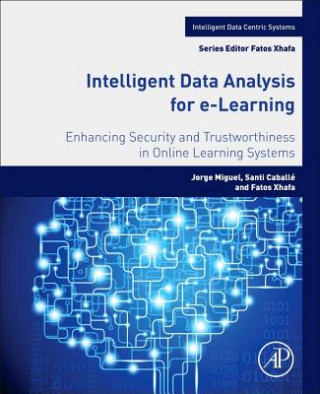
Intelligent Data Analysis for e-Learning
Enhancing Security and Trustworthiness in Online Learning Systems
 Anglais
 286 b
286 b
 Livraison à Autriche
Jusqu'à 30 jours pour les retours
Les clients ont également acheté





 /
/
 Livre de poche
 31.09
€
31.09
€



 /
Livre de poche
9.79
€
/
Livre de poche
9.79
€
 /
Livre de poche
24.39
€
/
Livre de poche
24.39
€







 /
Livre de poche
39.69
€
/
Livre de poche
39.69
€






Intelligent Data Analysis for e-Learning addresses information security within e-Learning based on trustworthiness assessment and prediction. Over the past decade, many learning management systems have appeared in the education market. Security in these systems is essential for protecting against unfair and dishonest conduct--most notably cheating—however, e-Learning services are often designed and implemented without considering security requirements. Intelligent Data Analysis for e-Learning provides functional approaches of trustworthiness analysis, modeling, assessment and prediction for stronger security and support in on-line learning. Intelligent Data Analysis for e-Learning highlights the security deficiencies found in most online collaborative learning systems. The book explores the trustworthiness methodologies based on collective intelligence than can overcome these deficiencies. It examines trustworthiness analysis that utilizes the large amounts of data-learning activities generate, and as processing this data is costly, the book offers a parallel processing paradigm that can support learning activities in real time. The book discusses data visualization methods for managing e-Learning, providing the tools needed to analyze the data collected. Using a case-based approach, the book concludes with models and methodologies for evaluating and validating the security in e-learning systems. Provides guidelines for anomaly detection, security analysis, and trustworthiness data processing.Incorporates state-of-the-art multidisciplinary research on on-line collaborative learning, social networks, information security, learning management systems, and trustworthiness prediction. Proposes a parallel processing approach that decreases expensive data processing time. Offers strategies for ensuring against unfair and dishonest assessments.Demonstrates solutions using a real-life e-learning context.


À propos du livre
Anglais

Offrez ce livre dès aujourd'hui
C’est simple
1 Ajouter au panier et choisir l'option Livrer comme cadeau à la caisse. 2 Nous vous enverrons un bon d'achat 3 Le livre arrivera à l'adresse du destinataireCeci pourrait également vous intéresser






 /
Livre de poche
11.39
€
/
Livre de poche
11.39
€
 /
Livre de poche
15.39
€
/
Livre de poche
15.39
€
 /
Livre de poche
19.89
€
/
Livre de poche
19.89
€




 /
Livre de poche
16.19
€
/
Livre de poche
16.19
€

 /
Livre de poche
10.89
€
/
Livre de poche
10.89
€