
 Contact
 Comment faire ses achats
Livraison
Guide d'achat
 Anglais
 348 b
348 b
 Livraison à Autriche
Jusqu'à 30 jours pour les retours
Les clients ont également acheté






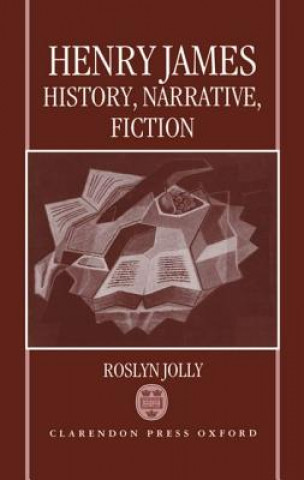
This is a study of Henry James's changing attitudes to history as a narrative model, tracing the development from his early interest in 'scientific' historiography to the radically anti-historical character of his late works. James's use of the term 'history' was influenced by developments in nineteenth-century historiography, but was also embedded in the complex of defensive manoeuvres through which Victorian culture sought to control its anxiety about the power of fiction. Reading James's novels in the light of contemporary debates about the morality and authorship and the politics of reading, Dr Jolly finds that fiction develops from being history's censored 'other' in the early works to being a valued mode of problem-solving in the later fiction. This shift may be seen as the product of James's increasing engagement with the reading practices of groups marginalized by high Victorian culture: women, the working class, other cultures, and the avant-garde. The book ends with a consideration of the challenge posed to James's radical anti-historical epistemology by the unprecedented violence of twentieth-century history. Drawing on contemporary narrative theory, and providing illuminating readings of a large number of James's novels, Roslyn Jolly had written a sophisticated and persuasive analysis of James's shifting definitions of history and fiction.


À propos du livre
Anglais
Catégories

Offrez ce livre dès aujourd'hui
C’est simple
1 Ajouter au panier et choisir l'option Livrer comme cadeau à la caisse. 2 Nous vous enverrons un bon d'achat 3 Le livre arrivera à l'adresse du destinataireCeci pourrait également vous intéresser




 /
/
 Adobe ePub DRM
 82.09
€
82.09
€





 /
/
 Livre de poche
15.99
€
Livre de poche
15.99
€

Bonjour ! Je suis Libroamiko, votre conseiller littéraire.
Comment puis-je vous aider ?