
 Contact
 Comment faire ses achats
Livraison
Guide d'achat
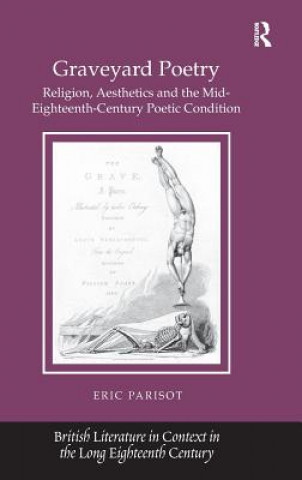
Graveyard Poetry
 Anglais
 604 b
604 b
 Livraison à Autriche
Jusqu'à 30 jours pour les retours
Les clients ont également acheté










 /
/
 Livre de poche
 44.41
€
44.41
€
 binding.
33.09
€
binding.
33.09
€





 /
Livre de poche
25.50
€
/
Livre de poche
25.50
€

While immensely popular in the eighteenth century, current critical wisdom regards graveyard poetry as a short-lived fad with little lasting merit. In the first book-length study of this important poetic mode, Eric Parisot suggests, to the contrary, that graveyard poetry is closely connected to the mid-century aesthetic revision of poetics. Graveyard poetry's contribution to this paradigm shift, Parisot argues, stems from changing religious practices and their increasing reliance on printed material to facilitate private devotion by way of affective and subjective response. Coupling this perspective with graveyard poetry's obsessive preoccupation with death and salvation makes visible its importance as an articulation or negotiation between contemporary religious concerns and emerging aesthetics of poetic practice. Parisot reads the poetry of Robert Blair, Edward Young and Thomas Gray, among others, as a series of poetic experiments that attempt to accommodate changing religious and reading practices and translate religious concerns into parallel reconsiderations of poetic authority, agency, death and afterlife. Making use of an impressive body of religious treatises, sermons and verse that ground his study in a precise historical moment, Parisot shows graveyard poetry's strong ties to seventeenth-century devotional texts, and most importantly, its influential role in the development of late eighteenth-century sentimentalism and Romanticism.


À propos du livre
Anglais

Offrez ce livre dès aujourd'hui
C’est simple
1 Ajouter au panier et choisir l'option Livrer comme cadeau à la caisse. 2 Nous vous enverrons un bon d'achat 3 Le livre arrivera à l'adresse du destinataireCeci pourrait également vous intéresser





 /
Livre de poche
7.99
€
/
Livre de poche
7.99
€





 /
Livre de poche
20.90
€
/
Livre de poche
20.90
€




 /
Livre de poche
12.89
€
/
Livre de poche
12.89
€







Bonjour ! Je suis Libroamiko, votre conseiller littéraire.
Comment puis-je vous aider ?