
 Contact
 Comment faire ses achats
Livraison
Guide d'achat
 Anglais
 166 b
166 b
 Livraison à Autriche
Jusqu'à 30 jours pour les retours
Les clients ont également acheté



 /
/
 Livre de poche
 30.79
€
30.79
€



















 /
Livre de poche
31.49
€
/
Livre de poche
31.49
€

 /
Livre de poche
44.79
€
/
Livre de poche
44.79
€

 /
Livre de poche
32.29
€
/
Livre de poche
32.29
€


 /
Livre de poche
19.29
€
/
Livre de poche
19.29
€





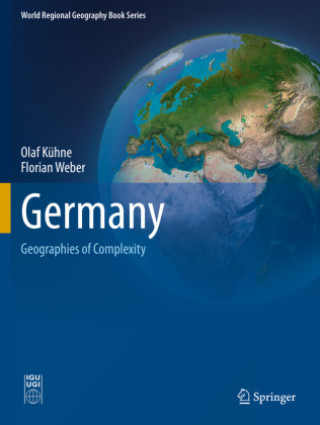
This book addresses the highly differentiated spatial, social, cultural and demographic structure(s) of Germany, with a particular focus on the reciprocal relations between different levels of spatial development.The historical development of Germany serves as a background in order to provide context for the development of spatially relevant ideas and ideals (whether in relation to politics, landscape, or culture). In this regard, questions of divergence and convergence become highly salient.The book makes the complexity of spatial and social developments in Germany comprehensible. The neopragmatic approach adopted here allows bringing together different theoretical strands while providing a basis for independent regional geographic research at the same time. Beginning with an overview of the physical structures of Germany which provides the material point of departure for the societal development of Germany, key aspects of the German history are discussed. Particular attention is paid to the reciprocal influence between material substrate and notions of landscape. Here, specific 'German' trajectories of aesthetic and normative conceptions of landscape become clear.A common theme throughout the book are questions of divergence and of efforts towards convergence, which become evident when considering past and present economic, political, and demographic developments. Efforts to tackle current challenges, such as adapting to climate change and mitigating it, or securing raw materials, also become apparent. The complexity of spatial processes in Germany is illustrated in case study regions dealing with the challenges of structural change in traditional industrial regions (such as the Ruhr area), or e.g. efforts of Berlin to position and find itself as the capital of a unified Germany.Overall, the book shows how theory-driven regional geographic research can make spatiotemporal complexities tangible and comprehensible.


À propos du livre
Anglais

Offrez ce livre dès aujourd'hui
C’est simple
1 Ajouter au panier et choisir l'option Livrer comme cadeau à la caisse. 2 Nous vous enverrons un bon d'achat 3 Le livre arrivera à l'adresse du destinataireCeci pourrait également vous intéresser







 /
Livre de poche
87.69
€
/
Livre de poche
87.69
€



 /
Livre de poche
8.89
€
/
Livre de poche
8.89
€








 /
Livre de poche
19.09
€
/
Livre de poche
19.09
€



Bonjour ! Je suis Libroamiko, votre conseiller littéraire.
Comment puis-je vous aider ?