
 Contact
 Comment faire ses achats

Livraison
Guide d'achat
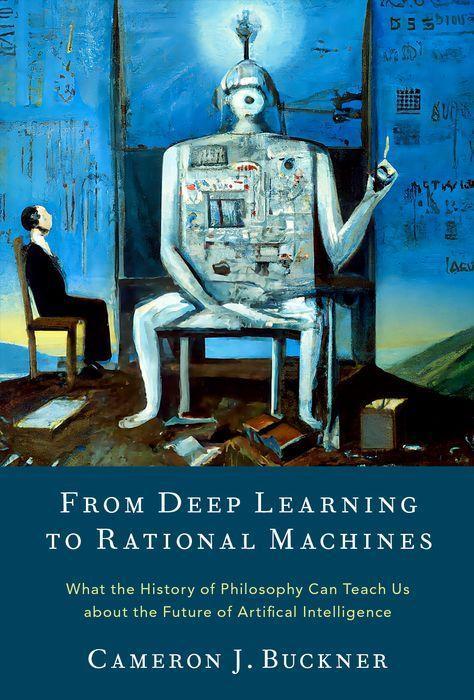
From Deep Learning to Rational Machines
 Anglais
 102 b
 Livraison à Autriche
Jusqu'à 30 jours pour les retours
Les clients ont également acheté





This book provides a framework for thinking about foundational philosophical questions surrounding the use of deep artificial neural networks ("deep learning") to achieve artificial intelligence. Specifically, it links recent breakthroughs to classic works in empiricist philosophy of mind. In recent assessments of deep learning's potential, scientists have cited historical figures from the philosophical debate between nativism and empiricism, which concerns the origins of abstract knowledge. These empiricists were faculty psychologists; that is, they argued that the extraction of abstract knowledge from experience involves the active engagement of psychological faculties such as perception, memory, imagination, attention, and empathy. This book explains how recent deep learning breakthroughs realized some of the most ambitious ideas about these faculties from philosophers such as Aristotle, Ibn Sina (Avicenna), John Locke, David Hume, William James, and Sophie de Grouchy. It illustrates the utility of this interdisciplinary connection by showing how it can provide benefits to both philosophy and computer science: computer scientists can continue to mine the history of philosophy for ideas and aspirational targets to hit, and philosophers can see how some of the historical empiricists' most ambitious speculations can now be realized in specific computational systems.


À propos du livre
Anglais

Offrez ce livre dès aujourd'hui
C’est simple
1 Ajouter au panier et choisir l'option Livrer comme cadeau à la caisse. 2 Nous vous enverrons un bon d'achat 3 Le livre arrivera à l'adresse du destinataireCeci pourrait également vous intéresser
















Bonjour ! Je suis Libroamiko, votre conseiller littéraire.
Comment puis-je vous aider ?