
 Contact
 Comment faire ses achats
Livraison
Guide d'achat
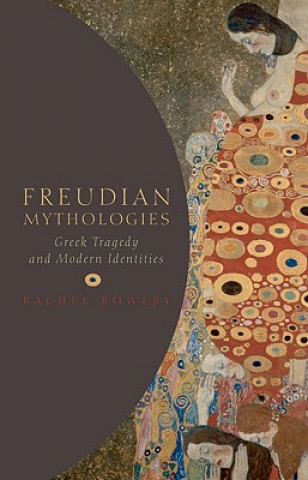
Freudian Mythologies
 Anglais
 145 b
145 b
 Livraison à Autriche
Jusqu'à 30 jours pour les retours
Les clients ont également acheté













 /
/
 Livre de poche
 22.99
€
22.99
€









 /
Livre de poche
64.99
€
/
Livre de poche
64.99
€



 /
Livre de poche
14.99
€
/
Livre de poche
14.99
€


More than a hundred years ago, Freud made a new mythology by revising an old one: Oedipus, in Sophocles' tragedy the legendary perpetrator of shocking crimes, was an Everyman whose story of incest and parricide represented the fulfilment of universal and long forgotten childhood wishes. The Oedipus complex - child, mother, father - suited the nuclear families of the mid-twentieth century. But a century after the arrival of the psychoanalytic Oedipus, it might seem that modern lives are very much changed. Typical family formations and norms of sexual attachment are changing, while the conditions of sexual difference, both biologically and socially, have undergone far-reaching modifications. Today, it is possible to choose and live subjective stories that the first psychoanalytic patients could only dream of. Different troubles and enjoyments are speakable and unspeakable; different selves are rejected, discovered, or sought. Many kinds of hitherto unrepresented or unrepresentable identity have entered into the ordinary surrounding stories through which children and adults find their bearings in the world, while others have become obsolete. Biographical narratives that would previously have seemed unthinkable or incredible--'a likely story!'--have acquired the straightforward plausibility of a likely story. This book takes two Freudian routes to think about some of the present entanglements of identity. First, it follows Freud in returning to Greek tragedies - Oedipus and others - which may now appear strikingly different in the light of today's issues of family and sexuality. And second, it re-examines Freud's own theories from these newer perspectives, drawing out different strands of his stories of how children develop and how people change (or don't). both kinds of mythology, the classical and the theoretical, may now, in their difference, illuminate some of the forming stories of our contemporary world of serial families, multiple sexualities, and new reproductive technologies.


À propos du livre
Anglais
Catégories

Offrez ce livre dès aujourd'hui
C’est simple
1 Ajouter au panier et choisir l'option Livrer comme cadeau à la caisse. 2 Nous vous enverrons un bon d'achat 3 Le livre arrivera à l'adresse du destinataireCeci pourrait également vous intéresser

 /
Livre relié
208.89
€
/
Livre relié
208.89
€




 /
Livre de poche
8.79
€
/
Livre de poche
8.79
€







 /
Livre de poche
14.69
€
/
Livre de poche
14.69
€

 /
Livre relié
230.89
€
/
Livre relié
230.89
€





Bonjour ! Je suis Libroamiko, votre conseiller littéraire.
Comment puis-je vous aider ?