Contact
 Comment faire ses achats
Livraison
Guide d'achat
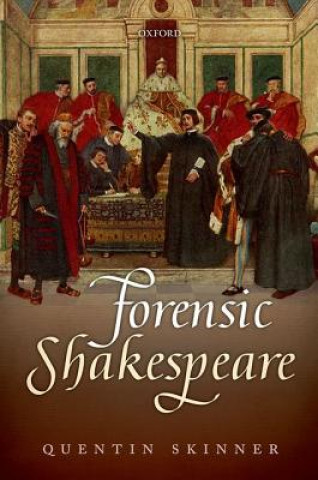
Forensic Shakespeare
 Anglais
 68 b
68 b
 Livraison à Autriche
Jusqu'à 30 jours pour les retours
Les clients ont également acheté






 Livre de poche
 41.29
€
41.29
€





 /
Livre de poche
25.99
€
/
Livre de poche
25.99
€





 /
Livre de poche
11.39
€
/
Livre de poche
11.39
€










 /
Livre de poche
43.49
€
/
Livre de poche
43.49
€


Forensic Shakespeare illustrates Shakespeare's creative processes by revealing some of the intellectual materials out of which some of his most famous works were composed. Focusing on the narrative poem Lucrece, on four of his late Elizabethan plays - Romeo and Juliet, The Merchant of Venice, Julius Caesar and Hamlet - and on three early Jacobean dramas, Othello, Measure for Measure and All's Well That Ends Well, Quentin Skinner argues that there are major speeches, and sometimes sequences of scenes, that are crafted according to a set of rhetorical precepts about how to develop a persuasive judicial case, either in accusation or defence. Some of these works have traditionally been grouped together as 'problem plays', but here Skinner offers a different explanation for their frequent similarities of tone. There have been many studies of Shakespeare's rhetoric, but they have generally concentrated on his wordplay and use of figures and tropes. By contrast, this study concentrates on Shakespeare's use of judicial rhetoric as a method of argument. By approaching the plays from this perspective, Skinner is able to account for some distinctive features of Shakespeare's vocabulary, and also help to explain why certain scenes follow a recurrent pattern and arrangement.


À propos du livre
Anglais

Offrez ce livre dès aujourd'hui
C’est simple
1 Ajouter au panier et choisir l'option Livrer comme cadeau à la caisse. 2 Nous vous enverrons un bon d'achat 3 Le livre arrivera à l'adresse du destinataireCeci pourrait également vous intéresser
 /
Livre de poche
21.49
€
/
Livre de poche
21.49
€






 /
Livre relié
213.19
€
/
Livre relié
213.19
€




 /
Livre relié
173.39
€
/
Livre relié
173.39
€
 /
Livre de poche
10.49
€
/
Livre de poche
10.49
€