
 Contact
 Comment faire ses achats
Livraison
Guide d'achat
 Anglais
 359 b
359 b
 Livraison à Autriche
Jusqu'à 30 jours pour les retours
Les clients ont également acheté










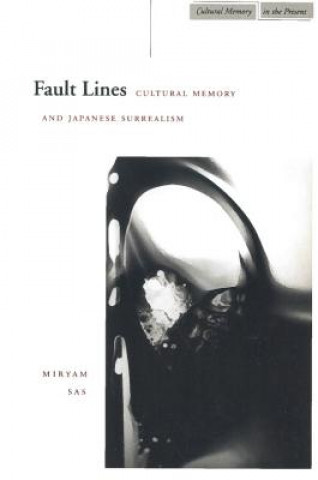
How can a movement like Surrealism be transferred, transplanted, or transported from one culture to another, one language to another? This book traces the creative dialogue between France and Japan in the early twentieth century, focusing on Surrealist and avant-garde writings. It opens a theoretical treatment of cultural memory, influence, visuality, writing, nostalgia, and nation to suggest a new perspective for the reading of modern Japanese culture and cross-cultural interactions. The author argues that the problem of literary influences should be recast as a problem of cultural memory, where analysis of causes and effects gives way to a deeper analysis of displacements and aftershocks, which she calls cultural fault lines. The book analyzes the writings of Takiguchi Shuzo, Nishiwaki Junzaburo, Kitasono Katsue, and others whose work was associated explicitly with the Surrealist movement in Japan. It also incorporates readings of other experimental works and postwar performances that reflect the wider impact of these avant-garde ideas. The author argues that a vision of alterity, a foreign space located somewhere beyond, plays a crucial role in formulations of avant-garde praxis in both the Japanese and French contexts. Here exploration of Japanese notions of the Surreal, calling for a rereading of received notions about French avant-gardes, leads to a reconfiguration of this period, written less as a narrative history of literature than as the nonlinear route of a multivalent dialogue.


À propos du livre
Anglais

Offrez ce livre dès aujourd'hui
C’est simple
1 Ajouter au panier et choisir l'option Livrer comme cadeau à la caisse. 2 Nous vous enverrons un bon d'achat 3 Le livre arrivera à l'adresse du destinataireCeci pourrait également vous intéresser






 /
/
 Livre relié
 44.39
€
44.39
€






Bonjour ! Je suis Libroamiko, votre conseiller littéraire.
Comment puis-je vous aider ?