
 Contact
 Comment faire ses achats
Livraison
Guide d'achat
 Anglais
 217 b
217 b
 Livraison à Autriche
Jusqu'à 30 jours pour les retours
Les clients ont également acheté






 /
/
 Livre de poche
 17.95
€
17.95
€


 /
Livre de poche
30.29
€
/
Livre de poche
30.29
€


 /
Livre de poche
59.29
€
/
Livre de poche
59.29
€







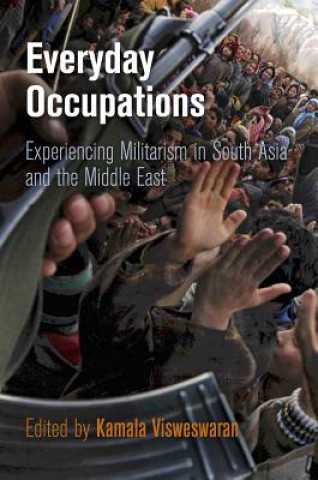
In the twenty-first century, political conflict and militarization have come to constitute a global social condition rather than a political exception. Military occupation increasingly informs the politics of both democracies and dictatorships, capitalist and formerly socialist regimes, raising questions about its relationship to sovereignty and the nation-state form. Israel and India are two of the world's most powerful postwar democracies yet have long-standing military occupations. Pakistan, Bangladesh, and Turkey have passed through periods of military dictatorship, but democracy has yielded little for their ethnic minorities who have been incorporated into the electoral process. Sri Lanka and Bangladesh (like India, Pakistan, and Turkey) have felt the imprint of socialism; declarations of peace after long periods of conflict in these countries have not improved the conditions of their minority or indigenous peoples but rather have resulted in "violent peace" and remilitarization. Indeed, the existence of standing troops and ongoing state violence against peoples struggling for self-determination in these regions suggests the expanding and everyday nature of military occupation. Such everydayness raises larger issues about the dominant place of the military in society and the social values surrounding militarism. Everyday Occupations examines militarization from the standpoints of both occupier and occupied. With attention to gender, poetics, satire, and popular culture, contributors who have lived and worked in occupied areas in the Middle East and South Asia explore what kinds of society are foreclosed or made possible by militarism. The outcome is a powerful contribution to the ethnography of political violence. Contributors: Nosheen Ali, Kabita Chakma, Richard Falk, Sandya Hewamanne, Mohamad Junaid, Rhoda Kanaaneh, Hisyar Ozsoy, Cheran Rudhramoorthy, Serap Ruken Sengul, Kamala Visweswaran.


À propos du livre
Anglais
Catégories

Offrez ce livre dès aujourd'hui
C’est simple
1 Ajouter au panier et choisir l'option Livrer comme cadeau à la caisse. 2 Nous vous enverrons un bon d'achat 3 Le livre arrivera à l'adresse du destinataireCeci pourrait également vous intéresser



 /
Livre de poche
43.99
€
/
Livre de poche
43.99
€


 /
Livre de poche
12.59
€
/
Livre de poche
12.59
€


 /
Livre de poche
13.59
€
/
Livre de poche
13.59
€


 /
Livre de poche
60.19
€
/
Livre de poche
60.19
€










Bonjour ! Je suis Libroamiko, votre conseiller littéraire.
Comment puis-je vous aider ?