
 Contact
 Comment faire ses achats
Livraison
Guide d'achat
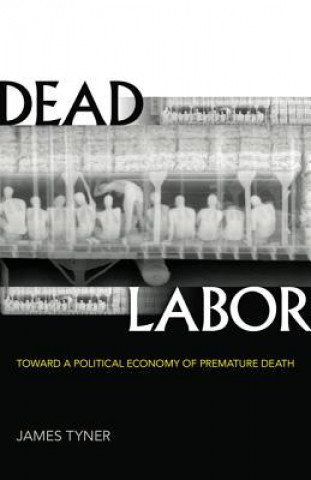
Dead Labor
 Anglais
 51 b
51 b
 Livraison à Autriche
Jusqu'à 30 jours pour les retours
Les clients ont également acheté








 /
/
 Livre de poche
 43.49
€
43.49
€










 /
Livre de poche
57.29
€
/
Livre de poche
57.29
€
 /
Livre de poche
18.95
€
/
Livre de poche
18.95
€

A groundbreaking consideration of death from capitalism, from the seventeenth to the twenty-first century
From a 2013 Texas fertilizer plant explosion that killed fifteen people and injured 252 to a 2017 chemical disaster in the wake of Hurricane Harvey, we are confronted all too often with industrial accidents that reflect the underlying attitude of corporations toward the lives of laborers and others who live and work in their companies' shadows. Dead Labor takes seriously the myriad ways in which bodies are commodified and profits derived from premature death. In doing so it provides a unique perspective on our understanding how life and death drive the twenty-first-century global economy.
James Tyner tracks a history from the 1600s through which premature death and mortality became something calculable, predictable, manageable, and even profitable. Drawing on a range of examples, including the criminalization of migrant labor, medical tourism, life insurance, and health care, he explores how today we can no longer presume that all bodies undergo the same processes of life, death, fertility, and mortality. He goes on to develop the concept of shared mortality among vulnerable populations and examines forms of capital exploitation that have emerged around death and the reproduction of labor.
Positioned at the intersection of two fields-the political economy of labor and the philosophy of mortality-Dead Labor builds on Marx's notion that death (and truncated life) is a constant factor in the processes of labor. Considering premature death also as a biopolitical and bioeconomic concept, Tyner shows how racialized and gendered bodies are exposed to it in unbalanced ways within capitalism, and how bodies are then commodified, made surplus and redundant, and even disassembled in order to accumulate capital.


À propos du livre
Anglais

Offrez ce livre dès aujourd'hui
C’est simple
1 Ajouter au panier et choisir l'option Livrer comme cadeau à la caisse. 2 Nous vous enverrons un bon d'achat 3 Le livre arrivera à l'adresse du destinataireCeci pourrait également vous intéresser





















Bonjour ! Je suis Libroamiko, votre conseiller littéraire.
Comment puis-je vous aider ?