
 Contact
 Comment faire ses achats
Livraison
Guide d'achat
 Anglais
 24 b
24 b
 Livraison à Autriche
Jusqu'à 30 jours pour les retours
Les clients ont également acheté



















 /
/
 Livre de poche
 27.39
€
27.39
€





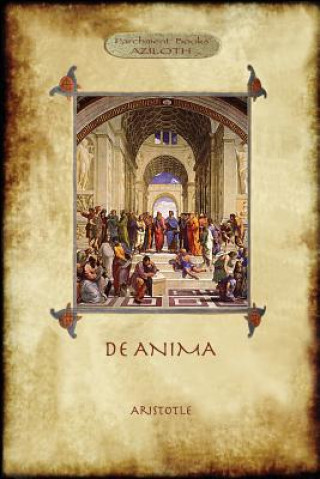
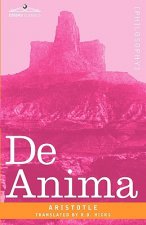
Aristotle of Stagira was arguably the most famous of all Greek Philosophers. A pupil of Plato's Academy, he set up his own school and, unlike Plato, he emphasized natural philosophy, studying the heavens (he believed the earth to be spherical) and making meticulous dissections of many animals, by which he constructed a surprisingly modern system of classification. A true polymath, Aristotle's oeuvre comprises 150 volumes of work on a host of subjects, from politics to poetry, through ethics, theatre, music, biology and logic to physics and metaphysics. In 'De Anima', Aristotle focuses his extraordinary intellect upon the very centre of our being. What, he asks, is the Soul? How does it come to be? What is its nature and attributes? Is it immortal? Using logic and close reasoning, he constructs a comprehensive account of the soul's facets and functions, describing the manner in which the many physical attributes of corporeal existence are mediated by the intangible, elusive soul. R. D. Hicks was a classicist and Fellow of Trinity College, Cambridge University. His original translation covers all three books of 'De Anima' and is preceded by a 40-page introduction, giving the reader a clear perspective on Greek thought in Aristotle's time. A must for all those interested in Greek Classics and the development of Western Philosophy.


À propos du livre
Anglais

Offrez ce livre dès aujourd'hui
C’est simple
1 Ajouter au panier et choisir l'option Livrer comme cadeau à la caisse. 2 Nous vous enverrons un bon d'achat 3 Le livre arrivera à l'adresse du destinataireCeci pourrait également vous intéresser


 /
Livre de poche
18.59
€
/
Livre de poche
18.59
€



 /
Livre relié
9.29
€
/
Livre relié
9.29
€


 /
Livre de poche
20.09
€
/
Livre de poche
20.09
€
 /
Livre de poche
153.69
€
/
Livre de poche
153.69
€





Bonjour ! Je suis Libroamiko, votre conseiller littéraire.
Comment puis-je vous aider ?