
 Contact
 Comment faire ses achats
Livraison
Guide d'achat
 Anglais
 43 b
43 b
 Livraison à Autriche
Jusqu'à 30 jours pour les retours
Les clients ont également acheté












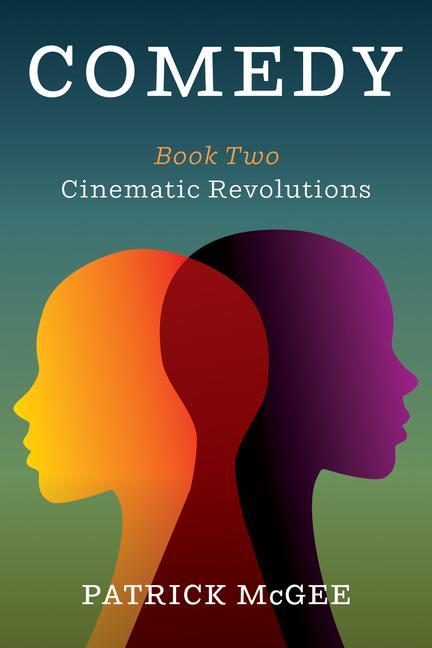
Comedy is a philosophical poem in the form of waking dream, inspired by Dante and William Blake. In book two, Cinematic Revolutions, the narrator, having passed through a cinema screen at the end of book one, arrives in the middle of a World War I field of dying men. An indescribable human figure appears who warns that these cinematic images are not real but projections of the cinematic mind with its power of empathy. Assuming different shapes and identities, this generic being becomes the narrator's guide. Through a series of dialogues and encounters, cinema and the visual culture it generates are identified with a cultural revolution--the nonviolent revolution--that surpasses the violent revolutions of the twentieth century. This view is articulated through encounters with Russian revolutionary Trotsky, twelve modernist writers and the philosopher Wittgenstein, Hitchcock, three dictators (Hitler, Stalin, Mao), a cinematic Jesus Christ, Holocaust historian Raul Hilberg, Martin Luther King, Malcolm X, and James Baldwin. Interspersed among these encounters are cinematic visions from directors like Eisenstein, Chaplin, and others. From Paris to Memphis, passing through Pasolini's black and white desert in Gospel according to Saint Matthew, descending into the dark underworld of Fritz Lang's Metropolis, rising into a Hollywood heaven of the forties, and standing on top of the Empire State Building with King Kong, cinematic images channel revolutionary desires and the necessity of nonviolence.


À propos du livre
Anglais
Catégories

Offrez ce livre dès aujourd'hui
C’est simple
1 Ajouter au panier et choisir l'option Livrer comme cadeau à la caisse. 2 Nous vous enverrons un bon d'achat 3 Le livre arrivera à l'adresse du destinataireCeci pourrait également vous intéresser






 /
/
 Livre de poche
 18.19
€
18.19
€




 /
Livre de poche
10.69
€
/
Livre de poche
10.69
€




 /
Livre de poche
17.19
€
/
Livre de poche
17.19
€


Bonjour ! Je suis Libroamiko, votre conseiller littéraire.
Comment puis-je vous aider ?