
 Contact
 Comment faire ses achats
Livraison
Guide d'achat
Cleft Countries
Regional Political Divisions and Cultures in Post-Soviet Ukraine and Moldova
 Anglais
 72 b
72 b
 Livraison à Autriche
Jusqu'à 30 jours pour les retours
Les clients ont également acheté



 /
/
 Livre de poche
 14.89
€
14.89
€











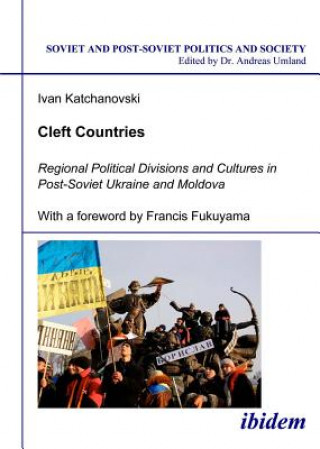
During the Orange Revolution in Ukraine, the second largest country in Europe came close to a violent break-up similar to that in neighboring Moldova, which witnessed a violent secession of the Transdniestria region. Numerous elections, including the hotly contested 2004 presidential elections in Ukraine, and surveys of public opinion showed significant regional divisions in these post-Soviet countries. Western parts of Ukraine and Moldova, as well as the Muslim Crimean Tatars, were vocal supporters of independence, nationalist, and pro-Western parties and politicians. In contrast, Eastern regions, as well as the Orthodox Turkic-speaking Gagauz, consistentlyexpressed pro-Russian and pro-Communist political orientations. Which factors historical legacies, religion, economy, ethnicity, or political leader-ship could explain these divisions? Why was Ukraine able to avoid a violent break-up, in contrast to Moldova? This is the first book to offer a systematic and comparative analysis of the regional political divisions in post-Soviet Ukraine and Moldova. The study examines voting behavior and political attitudes in two groups of regions: those which were under Russian, Ottoman, and Soviet rule; and those which were under Austro-Hungarian, Polish, Romanian, and Czechoslovak rule until World War I or World War II. This book attributes the regional political divisions to the differences in historical experience. This study helps us to better understand regional cleavages and conflicts, not only in Ukraine and Moldova, but also in other cleft countries.


À propos du livre
Anglais
Catégories

Offrez ce livre dès aujourd'hui
C’est simple
1 Ajouter au panier et choisir l'option Livrer comme cadeau à la caisse. 2 Nous vous enverrons un bon d'achat 3 Le livre arrivera à l'adresse du destinataireCeci pourrait également vous intéresser

 /
Livre de poche
39.99
€
/
Livre de poche
39.99
€
 /
Livre de poche
48.89
€
/
Livre de poche
48.89
€

 /
Livre de poche
34.49
€
/
Livre de poche
34.49
€
 /
Livre de poche
34.49
€
/
Livre de poche
34.49
€






Bonjour ! Je suis Libroamiko, votre conseiller littéraire.
Comment puis-je vous aider ?