
 Contact
 Comment faire ses achats
Livraison
Guide d'achat
 Anglais
 205 b
205 b
 Livraison à Autriche
Jusqu'à 30 jours pour les retours
Les clients ont également acheté












 /
/
 Livre de poche
 9.49
€
9.49
€






 /
Livre de poche
13.70
€
/
Livre de poche
13.70
€









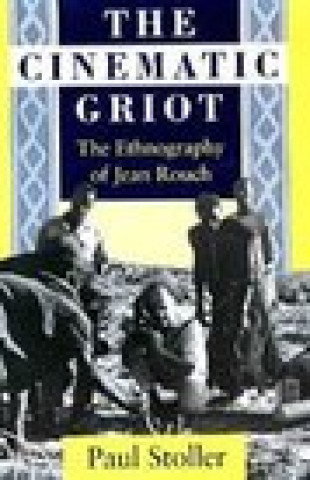
The most prolific ethnographic filmmaker in the world, a pioneer of cinema verite; and one of the earliest ethnographers of African societies, Jean Rouch (1917-) remains a controversial and often misunderstood figure in histories of anthropology and film. By examining Rouch's neglected ethnographic writings, Paul Stoller seeks to clarify the filmmaker's true place in anthropology. A brief account of Rouch's background, revealing the ethnographic foundations and intellectual assumptions underlying his fieldwork among the Songhay of Niger in the 1940s and 1950s, sets the stage for his emergence as a cinematic griot, a peripatetic bard who "recites" the story of a people through provocative imagery. Against this backdrop, Stoller considers Rouch's writings on Songhay history, myth, magic and possession, migration, and social change. By analyzing in depth some of Rouch's most important films and assessing Rouch's ethnography in terms of his own expertise in Songhay culture, Stoller demonstrates the inner connection between these two modes of representation. Stoller, who has done more fieldwork among the Songhay than anyone other than Rouch himself, here gives the first full account of Rouch the griot, whose own story scintillates with important implications for anthropology, ethnography, African studies, and film.


À propos du livre
Anglais

Offrez ce livre dès aujourd'hui
C’est simple
1 Ajouter au panier et choisir l'option Livrer comme cadeau à la caisse. 2 Nous vous enverrons un bon d'achat 3 Le livre arrivera à l'adresse du destinataireCeci pourrait également vous intéresser





 /
Livre de poche
27.19
€
/
Livre de poche
27.19
€


 /
Livre de poche
14.59
€
/
Livre de poche
14.59
€
 /
Livre de poche
30.80
€
/
Livre de poche
30.80
€

 /
Livre de poche
36.09
€
/
Livre de poche
36.09
€


 /
Livre de poche
36.90
€
/
Livre de poche
36.90
€








Bonjour ! Je suis Libroamiko, votre conseiller littéraire.
Comment puis-je vous aider ?