
 Contact
 Comment faire ses achats
Livraison
Guide d'achat
 Anglais
 197 b
197 b
 Livraison à Autriche
Jusqu'à 30 jours pour les retours
Les clients ont également acheté







 /
/
 Calendrier
 31.99
€
31.99
€








 /
/
 Livre de poche
27.95
€
Livre de poche
27.95
€









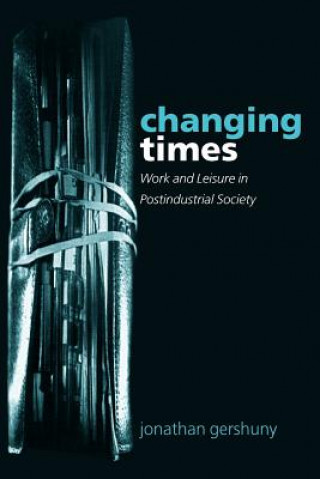
Time allocation, whether considered at the level of the individual or of the society, is a major focus of public concern. Are our lives more congested with work than they used to be? Is society polarizing into groups which, on one side, have too much work and too little leisure time to spend their money in, and on the other have no paid work, and hence no money to pay for the goods and services they might wish to use during their leisure? Has the recent convergence in men's and women's labour market roles led to an unfair distribution of the totals of paid plus unpaid work? These issues, and others similar, once the preserve of a few specialist sociologists and economists, now appear daily and prominently across the news and entertainment media. Yet there is surprisingly little substantive evidence of how individuals and societies spend their time, and of how this has changed in the developed world over the recent past. This book brings together, for the first time, data gathered in some forty national scale 'time-diary' studies, from twenty countries, and covering the last third of the twentieth century. It examines the newly emerging political economy of time, in the light of new estimates of how time is actually spent, and of how this has changed, in the developed world.


À propos du livre
Anglais
Catégories

Offrez ce livre dès aujourd'hui
C’est simple
1 Ajouter au panier et choisir l'option Livrer comme cadeau à la caisse. 2 Nous vous enverrons un bon d'achat 3 Le livre arrivera à l'adresse du destinataireCeci pourrait également vous intéresser




















Bonjour ! Je suis Libroamiko, votre conseiller littéraire.
Comment puis-je vous aider ?