
 Contact
 Comment faire ses achats
Livraison
Guide d'achat
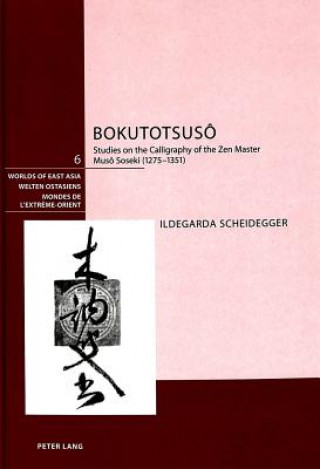
Bokutotsuso
 Anglais
 151 b
151 b
 Livraison à Autriche
Jusqu'à 30 jours pour les retours
Les clients ont également acheté





 /
/
 Livre de poche
 42.69
€
42.69
€






 /
Livre de poche
38.59
€
/
Livre de poche
38.59
€



Musô Soseki (1275-1351), one of the most important Zen patriarchs of the early fourteenth century in Japan, devoted his life to spreading Buddhist wisdom in his writings. As a member of the Gozan movement, he belonged to the literary elite and had a profound knowledge of Chinese und Japanese poetry. He left behind numerous calligraphies, among them those now housed in the temples Engakuji and Zuizenji in Kamakura and in Tenryűji and Saihôji in Kyoto. Musô signed many of his calligraphies with his pseudonym Bokutotsusô, which means 'the wooden stutterer'. Most of Musô's calligraphies are composed in cursive script and deal with themes of particular interest to him, such as nature and religious education. This book examines how these themes relate to the different stages of Musô's life. It also analyses his attitude toward calligraphy and the influence of other calligraphers on his artistic development. For this purpose, pivotal calligraphies that reveal Musô's stylistic development, his aesthetics and underlying message as well as the trajectory of his life have been chosen for closer examination. The research for this book was conducted at the temples that were at the center of Musô's activities. The first work to discuss Musô's calligraphy in a Western language, this book offers insights into his texts together with illustrations of Musô's brushwork.


À propos du livre
Anglais

Offrez ce livre dès aujourd'hui
C’est simple
1 Ajouter au panier et choisir l'option Livrer comme cadeau à la caisse. 2 Nous vous enverrons un bon d'achat 3 Le livre arrivera à l'adresse du destinataireCeci pourrait également vous intéresser

 /
Livre de poche
13.99
€
/
Livre de poche
13.99
€


 /
Livre de poche
6.49
€
/
Livre de poche
6.49
€
 /
Livre de poche
21.89
€
/
Livre de poche
21.89
€
 /
Livre de poche
31.89
€
/
Livre de poche
31.89
€

 /
Livre de poche
12.39
€
/
Livre de poche
12.39
€




 /
Livre de poche
10.89
€
/
Livre de poche
10.89
€






 /
Livre de poche
14.29
€
/
Livre de poche
14.29
€


Bonjour ! Je suis Libroamiko, votre conseiller littéraire.
Comment puis-je vous aider ?