
 Contact
 Comment faire ses achats

Livraison
Guide d'achat
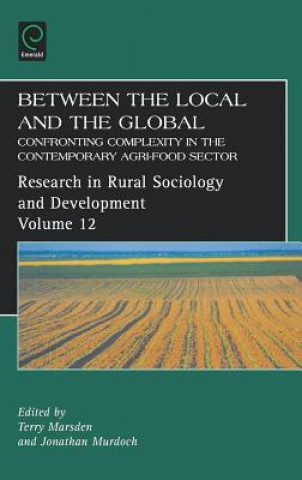
Between the Local and the Global
Confronting Complexity in the Contemporary Agri-Food Sector
 Anglais
 316 b
 Livraison à Autriche
Jusqu'à 30 jours pour les retours
Les clients ont également acheté











 /
 Cartes géographiques
 14.90
€


 /
 Livre de poche
6.59
€

 /
Livre de poche
8.79
€

 /
Livre de poche
17.95
€

 /
Livre de poche
47.95
€
 /
Livre de poche
17.95
€





 /
Livre de poche
9.99
€


The volume presents a range of critical perspectives on the contemporary agri-food sector. The starting point is the recognition that geography matters in agri-food more than ever, and it plays a diverse range of roles in shaping production-consumption relations. With hindsight, it may be argued that the extensive rural sociological literature on the globalisation of food over the past twenty years has tended to over-emphasise the degree to which food products and processes have indeed been industrialised and standardised. But if diversity and variety have become increasingly significant in distinguishing food commodities, spaces of production, and the practices of consumption, how are we to critically understand and theorise this complexity? What are the features of the institutional, private, public and civic frameworks that work to promote and sustain diversity and complexity in the international food sector both within and between the global and the local? What new or reconfigured sets of power relations are developing through the unfolding of this complexity; and what do these suggest for the sustainability or vulnerability of rural locales and natures? Through the two sections of the book - first concerning theorising complexity, and the second, problematising local development and local complexities - and bringing together under this theme international theoretical and empirical comparisons, the book begins to explore this rich rural sociological and development field. The chapters examine in detail the ways that constellations of organisations, cultures and entrepreneurial practices become embedded in discrete spatial areas. They show the importance of these areas and their associated institutions to the contemporary, and increasingly contingent development of the international food system. Both sections of the volume take a critical perspective when examining the agri-food sector, exploring the sociological and developmental impact of the contemporary food sector.


À propos du livre
Anglais

Offrez ce livre dès aujourd'hui
C’est simple
1 Ajouter au panier et choisir l'option Livrer comme cadeau à la caisse. 2 Nous vous enverrons un bon d'achat 3 Le livre arrivera à l'adresse du destinataireCeci pourrait également vous intéresser





 /
Livre relié
237.29
€







 /
Livre de poche
22.99
€

 /
Livre de poche
23.29
€



 /
Livre de poche
21.19
€




Bonjour ! Je suis Libroamiko, votre conseiller littéraire.
Comment puis-je vous aider ?