
 Contact
 Comment faire ses achats
Livraison
Guide d'achat
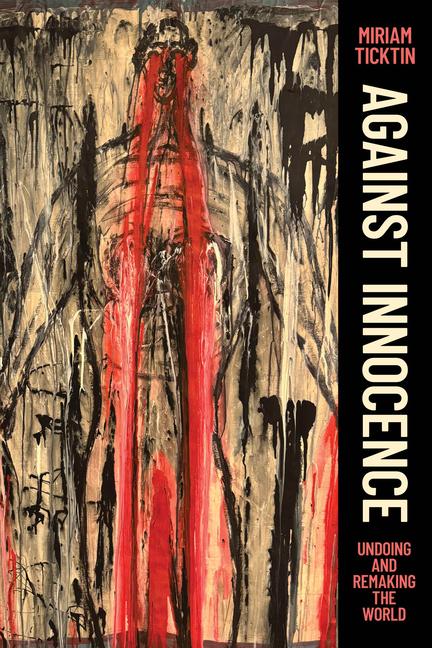
Against Innocence
 Anglais
 68 b
68 b
 Livraison à Autriche
Jusqu'à 30 jours pour les retours
Les clients ont également acheté








A provocative critique of how the concept of innocence functions in contemporary politics and society. In this timely and bold book, Miriam Ticktin explores how a concept that consistently appears as a moral good actually ends up creating harm for so many. Claims to innocence protect migrant children, but often at the expense of their parents; claims to the innocence of the fetus work to punish women. Ticktin shows how innocence structures political relationships, focusing on individual victims and saviors, while foreclosing forms of collective responsibility. Ultimately, she wants to understand how the discourse around innocence functions, what gives it such power, and why we are so compelled by it, while showing that alternative political forms already exist. She examines this process across various domains, from migration, science, and environmentalism to racial and reproductive justice. Throughout the book, Ticktin shows how the concept of innocence intimately shapes why, how, and for whom we should care and whose lives matter—and how this can have devastating consequences when only an exceptional few can qualify as innocent. A politics grounded on innocence justifies a world built on inequality, designating most people—especially the racialized poor—as unworthy, undeserving, and less than human. As an alternative, she explores the aesthetics and politics of “commoning”—a collective regime of living that refuses a liberal politics of individual identity and victimhood.


À propos du livre
Anglais
Catégories

Offrez ce livre dès aujourd'hui
C’est simple
1 Ajouter au panier et choisir l'option Livrer comme cadeau à la caisse. 2 Nous vous enverrons un bon d'achat 3 Le livre arrivera à l'adresse du destinataireCeci pourrait également vous intéresser






 /
/
 Livre de poche
 81.39
€
81.39
€
Bonjour ! Je suis Libroamiko, votre conseiller littéraire.
Comment puis-je vous aider ?