
 Contact
 Comment faire ses achats
Livraison
Guide d'achat
 Anglais
 192 b
192 b
 Livraison à Autriche
Jusqu'à 30 jours pour les retours
Les clients ont également acheté















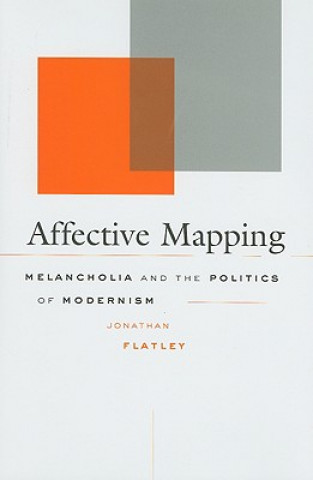
The paradoxical claim of this book is that dwelling on loss is not necessarily depressing. Instead, Jonathan Flatley argues, embracing melancholy can be a road back to contact with others and can lead people to productively remap their relationship to the world around them. Flatley demonstrates that a seemingly disparate set of modernist writers and thinkers almost simultaneously showed how literature and music can give us the means to comprehend and change our relation to loss.The texts at the center of Flatley's analysis - Henry James' "Turn of the Screw", W. E. B. Du Bois' "The Souls of Black Folk", and Andrei Platonov's "Chevengur" - share with Freud concern about a potentially depressing loss and with Walter Benjamin the hope that loss itself could become a means of connection and the basis for social transformation. For Du Bois, Platonov, and James, a focus on loss illuminates both the historical origins of melancholy and a heretofore unarticulated community of melancholics. This affective map is what makes possible the conversion of a depressive melancholia into a way to be interested in the world.


À propos du livre
Anglais

Offrez ce livre dès aujourd'hui
C’est simple
1 Ajouter au panier et choisir l'option Livrer comme cadeau à la caisse. 2 Nous vous enverrons un bon d'achat 3 Le livre arrivera à l'adresse du destinataireCeci pourrait également vous intéresser







 /
/
 Livre relié
 686.09
€
686.09
€




 /
Livre relié
31.79
€
/
Livre relié
31.79
€










 /
Livre de poche
159.49
€
/
Livre de poche
159.49
€
Bonjour ! Je suis Libroamiko, votre conseiller littéraire.
Comment puis-je vous aider ?