
 Contact
 Comment faire ses achats
Livraison
Guide d'achat
Adolf Loos
 Anglais
 77 b
77 b
 Livraison à Autriche
Jusqu'à 30 jours pour les retours
Les clients ont également acheté



 /
/
 Livre relié
 30.39
€
30.39
€

 /
Livre de poche
27.39
€
/
Livre de poche
27.39
€






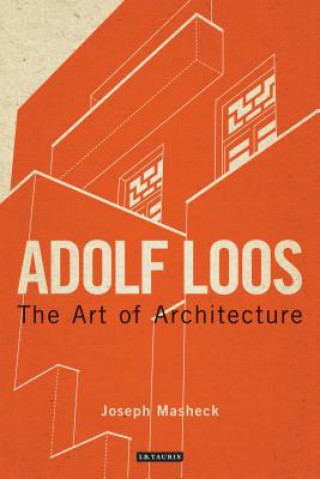
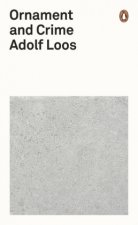
Widely regarded as one of the most significant prophets of modern architecture, Adolf Loos was a star in his own time. His work was emblematic of the turn-of-the-century generation that was torn between the traditional culture of the nineteenth century and the innovative modernism of the twentieth. His essay 'Ornament and Crime' equated superfluous ornament and 'decorative arts' with underclass tattooing in an attempt to tell modern Europeans that they should know better. But the negation of ornament was supposed to reveal, not negate, good style; and an incorrigible ironist has been taken too literally in denying architecture as a fine art. Without normalizing his edgy radicality, Masheck argues that Loos's masterful "astylistic architecture" was an appreciation of tradition and utility and not, as most architectural historians have argued, a mere repudiation of the florid style of the Vienna Secession. Masheck has reads Loos as a witty, ironic rhetorician who has all too often been taken at face value. Far from being the anti-architect of the modern era, Masheck's Loos is 'an unruly yet integrally canonical artist-architect'. He believed in culture, comfort, intimacy and privacy and advocated the evolution of artful architecture. This is a brilliantly written revisionist reading of a perennially popular architect.


À propos du livre
Anglais

Offrez ce livre dès aujourd'hui
C’est simple
1 Ajouter au panier et choisir l'option Livrer comme cadeau à la caisse. 2 Nous vous enverrons un bon d'achat 3 Le livre arrivera à l'adresse du destinataireCeci pourrait également vous intéresser








 /
Livre de poche
31.29
€
/
Livre de poche
31.29
€

 /
Livre relié
113.49
€
/
Livre relié
113.49
€


Bonjour ! Je suis Libroamiko, votre conseiller littéraire.
Comment puis-je vous aider ?