
 Contact
 Comment faire ses achats
Livraison
Guide d'achat
Sputnik Challenge
 Anglais
 92 b
92 b
Les clients ont également acheté


 /
/
 Livre de poche
 12.29
€
12.29
€

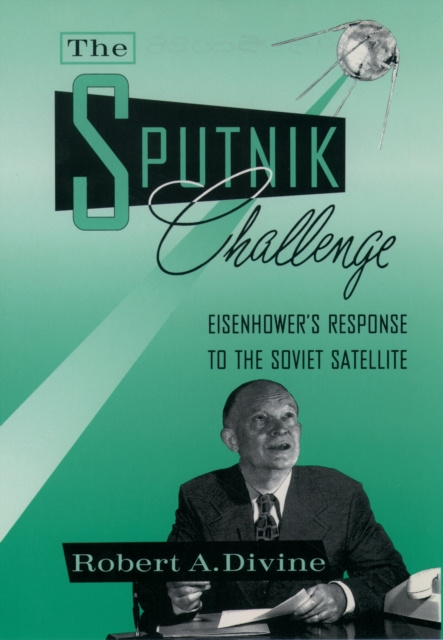
On October 4, 1957, the Soviet Union launched a 184-pound metal ball called Sputnik into orbit around the Earth, and America plummeted into a panic. Nuclear weapon designer Edward Teller claimed that the United States had lost "e;a battle more important and greater than Pearl Harbor,"e; and magazine articles appeared with such headlines as "e;Are We Americans Going Soft?"e; In the White House, President Eisenhower seemed to do nothing, leading Kennedy in 1960 to proclaim a "e;missile gap"e; in the Soviet's favor. Rarely has public perception been so dramatically at odds with reality. In The Sputnik Challenge, Robert Divine provides a fascinating look at Eisenhower's handling of the early space race--a story of public uproar, secret U-2 flights, bungled missile tests, the first spy satellite, political maneuvering, and scientific triumph. He recreates the national hysteria over the first two Sputnik launches, illustrating the anxious handwringing that the Democrats (led by Senate Majority Leader Lyndon Johnson) aggressively played for political gain. Divine takes us to private White House meetings, showing how Eisenhower worked closely with science adviser James Killian, allowing him to take the lead in creating a civilian agency--NASA--which provided intelligent and forceful leadership for American space programs. But the President also knew from priceless intelligence from U-2 flights over the U.S.S.R. that he had little to fear from the touted missile gap, and he fought to limit the growth and multiplication of military missile programs. Eisenhower's assurance, however, rested on classified information, and he did little to instill his confidence in the public. Nor could he boast of his early support for the secret spy satellite program (which quickly replaced the U-2 plane after Gary Powers was shot down in 1960). So the public continued to worry, feeding the national movement for educational reform as well as congressional maneuvering over funding for numerous strategic projects. Eisenhower, Divine writes, possessed keen strategic vision and a sure sense of budgetary priorities, but ultimately he flunked a crucial test of leadership when he failed to reassure the frightened public that their fears were groundless. As a result, he ultimately failed in his goal to limit military spending as well--which led to a real missile gap in reverse. Incisively written and deeply researched, The Sputnik Challenge provides a briskly-paced history of the origins of NASA, the space race, and the age of the ICBM.


À propos du livre
Anglais
Catégories

Offrez ce livre dès aujourd'hui
C’est simple
1 Ajouter au panier et choisir l'option Livrer comme cadeau à la caisse. 2 Nous vous enverrons un bon d'achat 3 Le livre arrivera à l'adresse du destinataireCeci pourrait également vous intéresser


 /
Livre de poche
13.39
€
/
Livre de poche
13.39
€



Bonjour ! Je suis Libroamiko, votre conseiller littéraire.
Comment puis-je vous aider ?