Contact
 Comment faire ses achats
Livraison
Guide d'achat
 Anglais
 174 b
174 b
Les clients ont également acheté






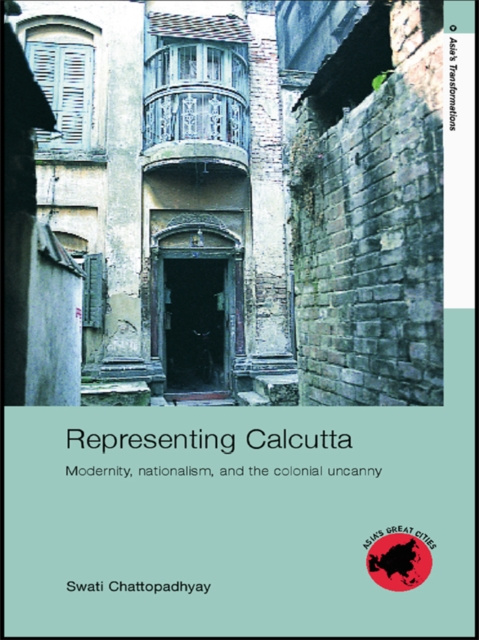
Representing Calcutta is a spatial history of the colonial city, and addresses the question of modernity that haunts our perception of Calcutta. The book responds to two inter-related concerns about the city. First is the image of Calcutta as the worst case scenario of a Third World city -- the proverbial 'city of dreadful nights.' Second is the changing nature of the city's public spaces -- the demise of certain forms of urban sociality that has been mourned in recent literature as the passing of Bengali modernity. By examining architecture, city plans, paintings, literature, and official reports through the lens of postcolonial, feminist, and spatial theory, the book explores the conditions of colonialism and anti-colonial nationalism that produced the city as a modern artefact. At the centre of this exploration resides the problem of 'representing' the city, representation understood as description and narration, as well as political representation. In doing so, Chattopadhyay questions the very idea of colonial cities as creations of the colonizers, and the model of colonial cities as dual cities, split in black and white areas, in favour of a more complicated view of the topography.


À propos du livre
Anglais

Offrez ce livre dès aujourd'hui
C’est simple
1 Ajouter au panier et choisir l'option Livrer comme cadeau à la caisse. 2 Nous vous enverrons un bon d'achat 3 Le livre arrivera à l'adresse du destinataireCeci pourrait également vous intéresser
 /
/
 Livre de poche
 30.79
€
30.79
€