
 Contact
 How to shop
Delivery
Shopping guide
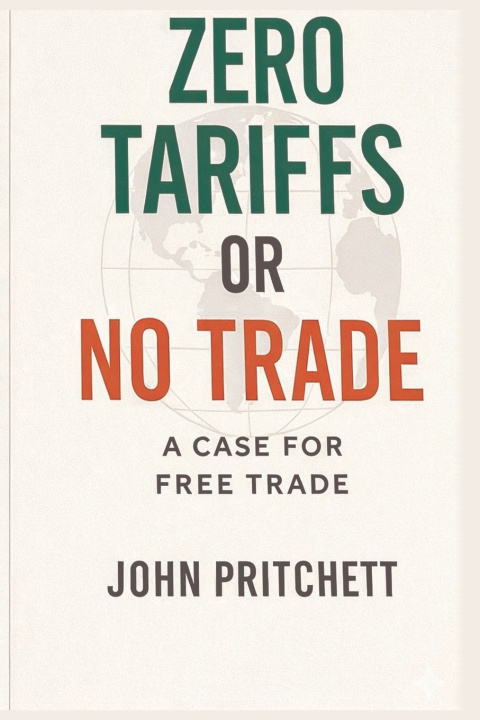
Zero Tariffs or No Trade
 English
 36 b
36 b
 Coming soon
 New
New
 Expected 27. 07. 2026
 Delivery to Austria
Up to 30 days for returns

Tariffs are not shields protecting American workers. They are hidden taxes paid by American families and businesses.
Zero Tariffs or No Trade: A Case for Free Trade presents a bold alternative to protectionism, retaliatory trade wars, and complicated agreements filled with exceptions: eliminate tariffs entirely and reserve access to the American market for countries willing to do the same.
John S. Pritchett argues that tariffs raise consumer prices, increase manufacturing costs, weaken supply chains, invite political favoritism, and protect inefficient industries at the expense of the broader economy. Although promoted as tools for defending jobs and national strength, tariffs often reward a small group of beneficiaries while spreading their costs across millions of households and businesses.
The book's proposal is straightforward: zero tariffs-or no access to the American market.
Drawing on American trade history and international examples, the book examines the consequences of protectionism, the economic forces that sustain it, and the myths surrounding trade deficits, manufacturing decline, wages, and job losses. It explains why automation and technological change have often mattered more than imports, why trade deficits are not simple measures of national failure, and why openness can strengthen innovation and competitiveness.
The book also confronts the real challenges of reform. Some industries, workers, and communities would face disruption under a zero-tariff system. Pritchett therefore outlines policies for retraining, income support, regional investment, workforce mobility, and economic diversification so that adjustment costs are not ignored or imposed on those least able to bear them.
National security, digital trade, environmental standards, supply-chain resilience, developing economies, and foreign subsidies are also addressed. Rather than using broad tariffs as a substitute for strategy, the book advocates targeted security measures, transparent rules, international cooperation, and direct support for affected workers.
Accessible, provocative, and policy-focused, Zero Tariffs or No Trade challenges readers to reconsider one of the most persistent assumptions in economic politics: that taxing imports makes a country stronger.
Free trade is not a concession to other nations. It is a decision to stop taxing ourselves.


About the book
English

Give this book today
It's easy
1 Add to cart and choose Deliver as present at the checkout 2 We'll send you a voucher 3 The book will arrive at the recipient's addressHi! I'm Libroamiko, your book advisor.
How can I help you?