
Become part of a community of book lovers from all over the world and get access to a whole bunch of benefits.
Create an account for free
 Contact
 How to shop
Help
Delivery
Austrian Post 5.49 €
GLS courier 4.99 €
DPD courier 4.49 €
DPD point 3.49 €
Shopping guide
My account
▸
Empty :-(
0
Language
 English
English
Book
Paperback
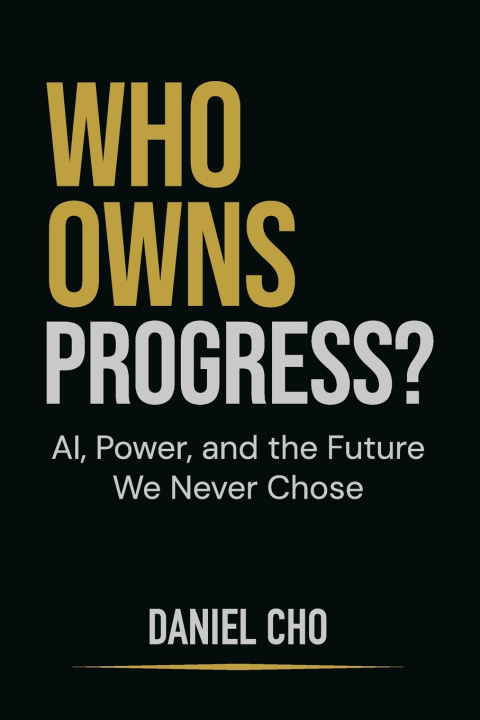
A handful of companies decide where artificial intelligence goes next. Everyone else just adapts. Th...
Full description
Libristo code: 53670103
?
 28 b
28 b
 Coming soon
 New
New
28 b
Coming soon
New
11.49
€
VAT included
Expected in stock
Expected 31. 08. 2026
 Delivery to Austria
Delivery to Austria
Up to 30 days for returns

A handful of companies decide where artificial intelligence goes next. Everyone else just adapts. This book explains who is actually deciding, and what still remains yours to decide.
WHO ACTUALLY OWNS THE FUTURE THIS TECHNOLOGY IS BUILDING
AI is sold as a tool for everyone. Its infrastructure, its direction, and its rewards belong to a remarkably small number of companies, investors, and governments. This book traces how that concentration of power actually works, from Kenyan data workers earning a fraction of what their labor is worth, to Indonesian small businesses renting infrastructure they will never own, to Silicon Valley engineers deciding what gets built next. It shows what real leverage still remains for the rest of us.WHAT YOU WILL UNDERSTAND
- The five levels of technological power, from access to ownership, and why most people only ever reach the first one
- The four positions in the AI economy, and the real difference between being augmented by a tool and managed by one
- Why productivity gains rarely translate into shorter hours or higher pay, and who actually captures them
- Why entry-level careers are quietly thinning even as headline employment numbers hold steady
- What separates countries building their own AI future from countries that only rent access to someone else's infrastructure
- A five-question test for judging any new technology by what it actually returns to the people living inside its effects
WHO THIS BOOK IS FOR
Knowledge workers, educators, policymakers, and parents who already sense that AI's benefits and its costs are landing on very different people, and want a clear, evidence-based account of why, grounded in labor economics and real reporting rather than speculation.ABOUT THE AUTHOR
Daniel Cho writes about technology, power, and everyday work. Drawing on labor research, global economic data, and reporting from across the industries AI is reshaping fastest, he traces how convenience quietly becomes dependency, and what remains within an ordinary reader's control.Open Chapter One tonight. By the end of it, you will ask a sharper question about every tool you touch, starting with the one open in your other tab right now.
Actress
&
Polyglot
EWA KASP
for
Play video


Libristo has the largest selection of foreign-language books. That’s why I buy my books there.
About the book
Full name
Who Owns Progress?
Author
Daniel Cho
Language
English
English
Binding
Book - Paperback
Date of issue
2026
Number of pages
200
EAN
9798194627509
Libristo code
53670103
Publishers
Independently published
Weight
276
Dimensions
152 x 229 x 12
Categories
