
 Contact
 How to shop
Delivery
Shopping guide
WHAT IS REAL?
 English
 28 b
28 b
 Coming soon
 New
New
 Expected 03. 08. 2026
 Delivery to Austria
Up to 30 days for returns

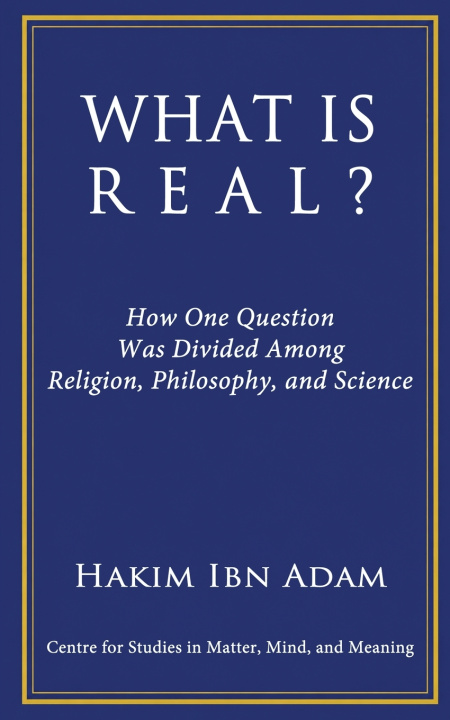
A person arrives at a modern university carrying a single question: What is real? Before it can be asked, a building must be chosen. Physics will translate the question into equations. Philosophy will divide it into smaller ones. The divinity school will honour it, on condition that it renounce any claim to knowledge. Three buildings, three vocabularies, three standards of evidence, and no common ground on which the three could be heard together. The arrangement presents itself not as an arrangement at all but as a discovery: there simply are three kinds of inquiry, and maturity consists in keeping them sorted. This book argues that it is not a discovery but a settlement. A settlement with an archive, a manufactured past, and a treaty. Galileo drew a line through every object in the world, deeding shape, number, and motion to nature and relocating colour, warmth, and everything felt into the perceiver. Descartes conveyed the two estates. Kant grounded each border in the structure of the knowing subject, where no appeal could reach it. Gould's treaty made the borders a matter of etiquette, so that conflict could no longer be disagreement about the real, only trespass. Each signatory thought he was protecting the whole. Against the settlement stand two millennia in which inquiry was differentiated but never partitioned: Plato's divided line, the Qurʾānic doctrine of the āyāt, al-Ghazālī's one court, and Mullā Ṣadrā's four journeys. The three estates, religion, philosophy, and science, are read for their scars. The book asks whether the fragments can be gathered, and by what right. Recovering an older discipline of gathering and separation, it argues that the case is still open, and that the alternative to the settlement is not another settlement.


About the book
English

Give this book today
It's easy
1 Add to cart and choose Deliver as present at the checkout 2 We'll send you a voucher 3 The book will arrive at the recipient's addressHi! I'm Libroamiko, your book advisor.
How can I help you?